


search intent analysis Key Takeaways
Search intent analysis is the process of uncovering the underlying goal behind a user’s query — whether they want to learn, buy, compare, or navigate to a specific site.
- Every query falls into four main types: informational, navigational, transactional, and commercial investigation — and each requires a distinct content strategy.
- Analyzing SERP features (featured snippets, People Also Ask, shopping results) is one of the fastest ways to reverse-engineer intent at scale.
- Integrating search intent analysis into your workflow boosts click-through rates, reduces bounce rates, and aligns your content with what Google rewards most.
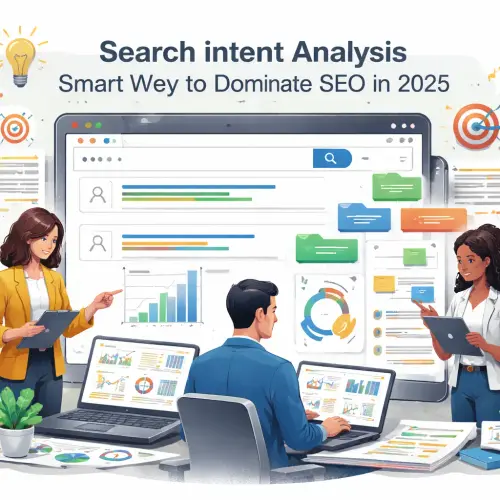
Performing accurate search intent analysis doesn’t require a six-figure toolset. With a systematic approach, you can decode intent for any keyword in under five minutes. Here’s a workflow that works for technical SEO pros, content teams, and agency owners alike. For a related guide, see 7 Best SERP Analysis Tools for Competitive SEO in 2025.
Step 1: Look at the SERP Layout
Google’s SERP features are the clearest signal of intent. When you search a keyword, ask yourself: What does Google show at the top? For a related guide, see What is a SERP analyzer tool?.
- Featured snippet + video carousel → strong informational intent.
- Shopping results + product reviews → commercial or transactional intent.
- Local pack + maps → local commercial intent.
- Knowledge panel + top stories → navigational or news-related.
For example, search “best noise-canceling headphones” and you’ll see a mix of review roundups and product listing ads. That tells you the intent is commercial investigation, not a simple informational query. A search intent analysis tool like Semrush or Ahrefs can automate this classification across thousands of keywords at once.
Step 2: Analyze Query Modifiers
The words people add to their search reveal intent. Modifiers like “how to,” “what is,” “guide,” “tutorial” signal informational intent. Words like “buy,” “price,” “discount,” “order” signal transactional intent. “Best,” “vs,” “review,” “top” indicate commercial investigation. “Login,” “site,” “official” point to navigational intent.
When you build a keyword list, group your terms by these modifiers. Then map your content format accordingly. For example, a post targeting “what is search intent in SEO” should be a comprehensive explainer, not a product page.
Step 3: Check User Behavior Data in Google Search Console
Once you have content ranking, use GSC to validate your intent assumptions. High impressions but low click-through rate (CTR) often means your title or meta description doesn’t match what users expect. High bounce rate from organic traffic suggests the content on the page doesn’t fulfill the intent.
Look at average position and CTR together. If you’re ranking in positions 3–5 but getting almost no clicks, the intent signal from your snippet might be off. This is where search intent analysis becomes a continuous optimization loop — not a one-time task.
Practical Applications for Every SEO Role
Different professionals use search intent analysis differently. Here’s how you can apply it based on your specific focus:
For Affiliate Marketers and Bloggers
Your goal is to pick the right content format for each query. If a keyword has commercial investigation intent, write a comparison or “best of” post rather than a generic informational article. For transactional terms like “buy vegan protein powder,” build a dedicated review page with affiliate links and a strong call-to-action. Avoid writing a “how to choose protein powder” guide for a term that clearly signals purchase intent.
For eCommerce Business Owners
Optimize category and product pages for transactional queries, and create supporting blog content for informational terms that sit higher in the funnel. For example, a home goods store might target “how to clean a cast iron skillet” (informational) with a blog post, while “buy cast iron skillet 12 inch” (transactional) should lead to a product page optimized for purchase conversion.
For AI SEO Enthusiasts and GEO Specialists
When using AI content generation tools, feed the model explicit intent signals. Start each brief with the intent type and the specific SERP features you want to target. For instance, if the query shows a “People Also Ask” box, instruct the AI to answer those related questions within the article. If the intent is local, include schema markup and location-specific phrasing.
For Technical SEO and Agency Teams
Incorporate intent classification into your keyword research process. Use search intent analysis to segment client keyword lists into content clusters. Then assign each cluster to the appropriate page type. This prevents content cannibalization — for example, having two pages on your site competing for the same term but written with different intent assumptions.
Troubleshooting Common Intent Mismatch Problems
Even experienced SEOs sometimes publish content that misses the mark. Here are the most frequent mistakes and how to fix them:
- Problem: High rankings but no conversions. Fix: Check if your target keyword actually has transactional intent. If the SERP shows only information content, your product page won’t convert well from that query.
- Problem: Low CTR despite top-5 ranking. Fix: Rewrite your title and meta description to match the dominant intent in the SERP. Use modifiers and tone that align with what the top results show.
- Problem: High bounce rate on a how-to guide. Fix: The guide might be too shallow. Add a video, step-by-step checklist, or downloadable resource to keep users engaged longer.
Optimization Tips for Intent-Driven Content
Once you’ve identified intent, optimize your content in these specific ways:
- Match content format to intent. Informational → long-form guide with subheadings. Commercial → comparison tables with pros/cons. Transactional → concise copy with clear CTAs.
- Align internal links. From an informational article, link to a commercial or transactional page for users ready to move down the funnel.
- Use structured data. For informational articles, use FAQ schema. For product pages, use Product schema with reviews. For local queries, use LocalBusiness schema.
- Update content periodically. Intent can shift over time as Google updates its SERP layout. Run quarterly search intent analysis audits for your key content pages.
Useful Resources
For deeper reading on intent classification and SERP analysis, explore these expert resources:
- Moz’s guide to search intent and how to optimize for it – a foundational article that covers the four intent types with real-world examples.
- Ahrefs’ breakdown of search intent in keyword research – a practical tutorial showing how to classify intent using their keyword explorer tool.
Frequently Asked Questions About search intent analysis
What is search intent analysis ?
Search intent analysis is the practice of uncovering the goal behind a user’s search query — whether they want to learn, navigate, compare, or buy — and using that insight to create content that satisfies their need.
Why is search intent important for SEO?
Google ranks pages that best satisfy the searcher’s intent. If your content doesn’t match intent — even if it has perfect keyword usage — it will struggle to rank well or convert visitors.
What are the four types of search intent?
The four types are informational (to learn), navigational (to reach a site), commercial investigation (to compare options), and transactional (to make a purchase or complete an action).
How do I determine search intent for a keyword?
Search the keyword on Google and observe the SERP features, top-ranking page types, and query modifiers. Use keyword research tools that include intent classification, then validate with Google Search Console data.
Can a keyword have multiple intents?
Yes. Some queries like “CRM software” can have both commercial and informational intent. In such cases, analyze the mix of SERP results and consider creating a hub page that addresses both intents.
Does Google use search intent in its algorithm?
Yes. Google’s algorithms — especially RankBrain and BERT — are designed to understand the context and intent behind queries, not just match keywords.
How does intent differ from keyword research?
Keyword research identifies what people search for; search intent analysis identifies why they search it. Intent adds the layer of psychology and goal-matching to the raw keyword data.
What tools help with search intent analysis ?
Tools like Semrush, Ahrefs, Moz, and Google Search Console provide intent classification, SERP feature analysis, and user behavior data to support intent analysis at scale.
Can you rank for a transactional keyword with a blog post?
Rarely. Transactional queries expect product pages with purchase options. A blog post may attract some traffic but usually won’t convert well for that intent unless you embed a strong CTA and product links.
How do SERP features indicate intent?
Featured snippets and video carousels indicate informational intent. Shopping results and product reviews point to commercial or transactional intent. Local packs indicate local commercial intent.
What is a real example of intent mismatch?
A company writing a 2,000-word guide for “buy solar panels” — when the SERP shows only pricing pages and shopping ads. The guide won’t rank because Google sees users want transaction-ready content.
How often should I audit content for intent alignment?
At least once per quarter, because SERPs change. New SERP features, competitor content, or algorithm updates can shift the dominant intent for a keyword.
What is the difference between commercial and informational intent?
Informational intent aims to learn (“what is SEO”). Commercial intent aims to compare before buying (“best SEO tool for beginners”). Commercial queries have a purchase horizon; informational queries do not.
Can AI tools help with search intent analysis ?
Yes. AI-powered platforms can cluster keywords by intent, analyze SERP features at scale, and suggest content structures that match the dominant intent for any query.
How does intent analysis help with content clusters?
By grouping keywords by intent type, you can assign each cluster to the appropriate page format — informational to blog posts, commercial to comparison pages, transactional to product pages — reducing cannibalization.
What is the role of user experience in search intent?
Even the right content type won’t succeed if the page is slow, hard to navigate, or lacks clear CTAs. UX signals like dwell time and bounce rate tell Google whether users found what they needed.
Does social media content have search intent?
Yes. Users on social platforms also have intent — entertainment, learning, inspiration, shopping. If you repurpose SEO content to social, adapt the format to the platform’s dominant intent style.
How does local SEO relate to search intent?
Local queries almost always have commercial or navigational intent. Users searching “coffee shop near me” expect directions and hours, not a history of coffee brewing.
Can search intent change over time?
Absolutely. For example, “yoga for beginners” may have been purely informational five years ago, but now often includes commercial intent as users look for paid courses or apps.
What is the fastest way to start with search intent analysis ?
Search your top 10 keywords on Google, screenshot the SERP layout, and classify each one by intent type. Then evaluate whether your existing content matches. That simple audit is the perfect starting point.