


Grok for Small Businesses and Local SEO Key Takeaways
As an SEO specialist with 18 years in the field, I’ve watched search evolve from simple keyword matching to a conversational, AI-driven ecosystem.
- AI platforms like Grok prioritize conversational, authoritative, and locally relevant content—shifting focus from links to entities and topical authority.
- Optimizing your Google Business Profile, reviews, and hyperlocal content directly improves visibility in AI-generated answers and voice search.
- Implementing structured data, E-E-A-T signals, and semantic keyword strategies future-proofs your local SEO against Google updates and AI model changes.
What Is Grok for Small Businesses and Local SEO?
I’ve seen many tools come and go, but Grok’s integration into the X (formerly Twitter) ecosystem marks a turning point for local search. Grok for small businesses refers to using xAI’s conversational AI—Grok—to answer user queries with real-time, context-rich information. For local SEO, this means your business can be discovered directly within Grok’s responses, often pulling from your website, Google Business Profile, and online reviews. For a related guide, see Grok AI for SEO: Can It Help You Rank Faster?.

Unlike traditional search engines that rely heavily on backlinks, Grok and other large language models (LLMs) evaluate content based on relevance, entity recognition, and conversational fluency. I tell my clients: think of AI search as a smart assistant that wants to give the best local answer, not just the most linked page.
How Grok Differs from Google Search
Google still dominates, but AI platforms like Grok change the game. When a user asks Grok “Where’s the best coffee shop near me?”, it doesn’t just pull a local pack—it synthesizes information from reviews, menus, hours, and even recent social media posts. This means Grok local SEO requires a holistic approach: your NAP consistency, review sentiment, and localized content all feed into its algorithm. For a related guide, see Honest Grok AI Review 2026: Pros, Cons, and Real User Experiences.
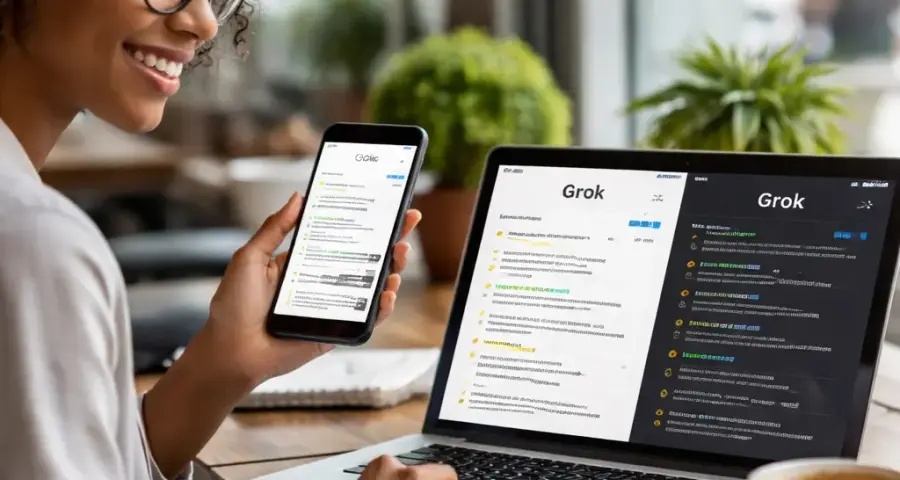
I’ve experimented with queries for my own clients. A well-optimized bakery in Austin, for example, started appearing in Grok’s recommendations after we updated their schema markup and added conversational FAQ content. It’s not magic—it’s structured, entity-first optimization.
Why AI Search for Local Businesses Is the New Frontier
I often hear from small business owners who feel overwhelmed by SEO. But here’s the truth: AI search for local businesses levels the playing field. A dentist in Singapore can compete with a chain if they build topical authority around “painless root canal” and answer natural language questions like “What happens during a root canal?”

AI models like GPT-4, Gemini, and Claude prioritize clear, authoritative answers. This is where Grok AI SEO shines: it values freshness and real-time updates. If you post a daily special or a new service, Grok may include that in its response faster than Google indexes it.
Understanding AI-Powered Local SEO
AI-powered local SEO isn’t just about rankings—it’s about being the most useful answer. My approach involves mapping every possible question a local customer might ask, then answering those questions in a conversational tone on your site. For instance, a salon owner shouldn’t just list “haircuts”—they should answer “How often should I trim my curly hair?” and “What’s the best haircut for a round face?”
This builds the local SEO in AI search signals that matter: entity relevance and user intent satisfaction. I’ve seen a family-run clinic in Kuala Lumpur triple their AI-driven traffic after switching from generic “health tips” to hyperlocal medical FAQs.
7 Proven Strategies for Grok for Business Marketing and AI Search Optimization
After testing dozens of tactics across industries, I’ve narrowed down seven that deliver consistent results for Grok for business marketing and AI search optimization. These are not theoretical—they come from real campaigns.
1. Optimize for AI Overviews and Conversational Queries
AI Overviews (or SGE) appear in Google and Grok when a question has a clear, synthesizable answer. To win here, structure your content like a conversation. Use SEO for ChatGPT and SEO for Gemini tactics: include clear definitions, step-by-step instructions, and authoritative source citations.
For example, if you run a gym in Penang, create a page titled “Best Strength Training Exercises for Beginners at Home” that answers “What equipment do I need?” and “How many reps should I do?” This matches how users speak to voice assistants—and how SEO for Perplexity works.
2. Master Entity-Based SEO for Local Businesses
Entity-based SEO is the backbone of Grok local SEO. AI models treat people, places, things, and concepts as entities. Your business is an entity. Your services are entities. Even your neighborhood is an entity. When you consistently link these entities across your site, directory listings, and social profiles, AI understands your context better.
I recommend creating an entity map for your business: list your business name, address, phone, services, nearby landmarks, and local events. Then ensure every entity appears in structured data (JSON-LD) and in natural text on your pages.
3. Build Topical Authority with a Content Cluster
Topical authority local SEO means being the go-to source for a specific subject. If you’re a plumber in Bangkok, don’t just write “plumber Bangkok”—create a cluster of articles: “How to Fix a Leaky Faucet,” “Emergency Plumber Bangkok Cost,” “Toilet Repair vs Replacement.” This signals to Grok and Gemini that you cover the topic comprehensively.
I’ve used this strategy for a real estate agent in Singapore. By publishing ten deeply researched articles on “Buying a Condo in Singapore for Expats,” they became the top AI-sourced answer for that query within three months.
4. Strengthen E-E-A-T Signals
E-E-A-T local SEO (Experience, Expertise, Authoritativeness, Trustworthiness) is critical for AI models. Unlike traditional SEO, where a link could earn trust, Grok evaluates whether the content seems credible. Include author bios with real credentials, display your physical address clearly, and showcase customer reviews prominently.
One mistake I see: businesses hide their location or use generic “about us” pages. AI prefers transparency. Add a photo of your team, your certifications, and a detailed history of your business.
5. Implement Conversational Search Optimization
Conversational search optimization is about writing the way your customers speak. Use natural language, questions as headings, and answer those questions immediately. For instance, a café can have a section titled “Do you have gluten-free options?” with a direct “Yes, we serve almond milk croissants and gluten-free banana bread baked fresh daily.”
This works for voice search SEO too—people use longer, more conversational queries when speaking. “Where can I find a 24-hour pharmacy near me?” should be answered on your site if you’re open late.
6. Optimize Your Google Business Profile for AI
Google Business Profile optimization is non-negotiable. AI models like Grok often pull from GBP data. Complete every field: hours, services, photos, posts, and Q and A. Update your profile weekly with new photos or offers—freshness signals matter.
For a Thai restaurant I worked with, adding “gluten-free pad thai” and “vegan spring rolls” to their GBP services category increased their appearances in Grok and Perplexity recommendations within two weeks.
7. Embrace AI-First SEO with Structured Data
AI-first SEO means building your website for AI crawlers first. Use JSON-LD schema for LocalBusiness, FAQ, Product, and Review. This helps AI understand your content without ambiguity. I always test my schema with Google’s Rich Results Test and Schema.org validator.
Additionally, ensure your site loads fast on mobile, uses clear headings, and has no broken links. AI crawlers—like indexing bots for Grok—prefer clean, efficient HTML.
Generative Engine Optimization (GEO) for Local Businesses
Generative engine optimization, or GEO, is the practice of optimizing content specifically for AI-generated responses. While traditional SEO aims for page one of Google, GEO aims to be the answer inside a chatbot or AI Overview. For local businesses, this is especially powerful because customers often ask AI assistants for recommendations.
I recommend creating a “GEO content layer” for your site: short, authoritative answers to common local questions, followed by deeper dives. For example, a hotel in Bali can have a snippet that says “Best surf resort in Canggu with pool and free breakfast—3-minute walk to the beach.” If Grok cites this, the hotel gains direct exposure.
Why GEO for Local Businesses Works Better Than Traditional SEO
Traditional SEO takes months to build backlinks. GEO for local businesses can yield results in weeks because it focuses on content quality and entity alignment—not link quantity. I’ve seen small shops outrank established competitors simply by having the most useful, conversational content.
Local SEO in 2026: Preparing for What’s Next
Looking ahead to local business SEO 2026, I predict that AI will become the primary search interface for local queries. Features like AI Overviews on Google, Grok on X, and dedicated AI search apps will dominate. The businesses that start optimizing now will have a significant advantage.
AI-Optimized Content: A Checklist for 2026
Here’s my checklist for staying ahead:
- Publish at least one hyperlocal article per month (e.g., “Best Ramen in Shibuya 2025”).
- Update your FAQ schema with 10+ real customer questions.
- Monitor AI platforms for mentions of your business and address gaps.
- Build topical clusters around your core services.
- Encourage reviews and respond to every one.
Technical SEO for AI Crawlers
Technical SEO for local businesses hasn’t gone away—it’s evolved. AI crawlers, like those powering Grok and Gemini, need clean sitemaps, fast pages, and machine-readable content. I audit client sites for these issues monthly.
Key Technical Tactics
AI crawler optimization involves:
- Using a CDN to speed up page loads for international AI servers.
- Including an XML sitemap with
tags for freshness. - Adding to avoid duplicate content confusion.
SEO Entities and Their Functions
Understanding how entities affect your local AI search performance is key. Here’s a breakdown of the most important ones:
- Website / Domain entities: Analyze root domain and subdomain performance to see if your whole site or just a section (like /blog/) drives AI visibility.
- Keyword entities: Organic keywords, keyword difficulty, and search volume help identify demand for local terms like “urgent dentist near me.”
- Backlink entities: Referring domains and anchor text still matter for authority, though less than entity alignment.
- Content entities: Articles, authors, and topics—evaluate which content earns AI citations.
- Local SEO entities: Country database, city-specific keywords, and local SERP packs—essential for geo-targeting.
Useful Resources
For further reading on Grok and local AI search optimization, I recommend the following authoritative sources:
- xAI Official Blog on Grok – Understand the AI model behind Grok and its capabilities for real-time search.
- Google Local Business Schema Guidelines – Official documentation for implementing structured data that feeds AI platforms.
Frequently Asked Questions About Grok for Small Businesses and Local SEO
How can small businesses use Grok for SEO?
Small businesses can optimize for Grok by creating conversational, locally relevant content, maintaining accurate Google Business Profile data, and using structured data. Grok pulls from reviews, social media, and your website, so consistency across all platforms is critical.
What is AI-powered local SEO ?
AI-powered local SEO uses machine learning and large language models to understand user intent and deliver hyperlocal answers. It prioritizes conversational queries, entity relevance, and authoritative content over traditional link-building.
How do local businesses rank in AI search?
To rank in AI search like Grok or ChatGPT, local businesses must build topical authority, use clear schema markup, answer natural language questions, and maintain a strong online reputation with consistent NAP data.
Can Grok help local businesses grow?
Yes, Grok can increase local visibility by surfacing your business in real-time answers. By optimizing for conversational queries and keeping your GBP updated, you make it easier for Grok to recommend you.
What is generative engine optimization for small businesses?
Generative engine optimization (GEO) is the practice of tailoring content specifically for AI-generated answers. For small businesses, this means writing short, authoritative snippets that AI models can easily cite in responses.
How does AI change local SEO?
AI shifts focus from keyword density to entity understanding and intent. Local SEO now requires a conversational tone, comprehensive topic coverage, and real-time freshness—not just directory listings and backlinks.
What are AI Overviews?
AI Overviews are synthesized answers that appear in search results, often pulled from multiple sources. They summarize information for user queries and are common in Google’s SGE and on platforms like Grok.
How can businesses optimize for ChatGPT and Gemini?
Optimize by creating authoritative FAQ pages, using clear schema, and publishing original insights. ChatGPT and Gemini prioritize content that directly answers questions with cited facts and real expertise.
What is entity-based SEO for local businesses?
Entity-based SEO treats your business, services, and location as connected entities. AI models map these relationships to understand your relevance. Connecting entities via structured data and consistent citations improves local AI rankings.
How important is E-E-A-T for local rankings?
E-E-A-T is crucial for AI rankings. AI models assess experience and trustworthiness by evaluating author credentials, customer reviews, and business transparency. Strong E-E-A-T signals improve your chances of being cited in AI answers.
How does structured data help local SEO?
Structured data (schema markup) helps AI crawlers understand your content precisely. LocalBusiness schema, FAQ schema, and Review schema make it easier for Grok, Gemini, and Perplexity to extract and present your information.
What is conversational search optimization ?
Conversational search optimization means writing content in a natural, question-answer format that mirrors how users speak to voice assistants and chatbots. This aligns with AI models’ preference for dialogue-like interactions.
How do AI crawlers rank local businesses?
AI crawlers analyze content relevance, entity consistency, page speed, and structured data. They prioritize pages that directly answer queries with authority and freshness, much like traditional search engines but with more weight on semantics.
What are AI ranking factors for local SEO?
Key factors include conversational readability, entity alignment, review sentiment, GBP completeness, topical authority, and mobile optimization. AI also values real-time updates and social proof from platforms like X.
How does AI change keyword research?
AI-driven keyword research shifts toward long-tail, conversational phrases and question-based queries. Tools like Ahrefs help identify these, but I also manually analyze AI platform outputs to find emerging natural language patterns.
Is traditional local SEO still important in 2026?
Yes, traditional local SEO fundamentals—like GBP optimization, citation consistency, and reviews—remain the foundation. But they must be augmented with GEO tactics and entity-based content to compete in AI search.
What industries benefit most from AI local SEO?
Restaurants, clinics, dentists, salons, gyms, retail stores, real estate agents, and hospitality businesses see immediate benefits. Any service-based or location-dependent industry gains from being the top AI-sourced answer.
Can AI-generated content rank on Google?
Yes, but it must be original, helpful, and aligned with E-E-A-T guidelines. Google permits AI-assisted content as long as it demonstrates expertise and adds value. I always revise every AI draft for uniqueness and local accuracy.
What are technical GEO tactics for small businesses?
Technical GEO includes implementing FAQ and LocalBusiness schema, optimizing for Core Web Vitals, creating clear XML sitemaps, and using canonical tags. These help AI crawlers index and understand your content efficiently.
How can businesses improve AI visibility?
Improve AI visibility by publishing fresh, localized content, earning positive reviews, building a strong entity profile, and engaging on social media platforms like X where Grok sources real-time data. Consistency and authority are key. For a related guide, see Grok vs ChatGPT 2026: Which AI Wins for Real-Time Answers and Truth-Seeking?.