


How to Use Grok for Generative Engine Optimization Key Takeaways
Generative Engine Optimization (GEO) is the practice of structuring content so that large language models (LLMs) like Grok, ChatGPT, Gemini, and Perplexity surface your brand as a trusted answer source.
- Grok’s real-time feed reasoning allows you to validate content authority faster than any other LLM.
- Success with Grok for GEO depends on semantic SEO , E-E-A-T signals, and technical GEO tactics like AI crawler optimization .
- By combining Grok analysis with structured data and topical authority clusters, you can improve AI visibility in ChatGPT, Gemini, and Perplexity simultaneously.
Why How to Use Grok for Generative Engine Optimization Is the Most Important SEO Skill in 2026
After 18 years in SEO — from keyword stuffing to semantic search to the rise of LLMs — I have never seen a shift as abrupt as Generative Engine Optimization. Traditional search engines reward links and keywords; AI search engines reward authority, clarity, and conversational relevance. Grok for GEO is not a buzzword. It is a direct response to the fact that Grok, like other LLMs, decides which sources to cite in its answers. If your content does not speak the language of entities, relationships, and structured facts, Grok will ignore it. For a related guide, see 7 Signs of High SERP Volatility: How It Impacts SEO Performance.

Grok generative engine optimization differs from standard AI SEO because Grok has access to real-time X (formerly Twitter) data and user interactions. This means Grok can reference trending discussions, breaking news, and live context. Your content must not only be evergreen but also reactive, authoritative, and embedded in real-world conversations.
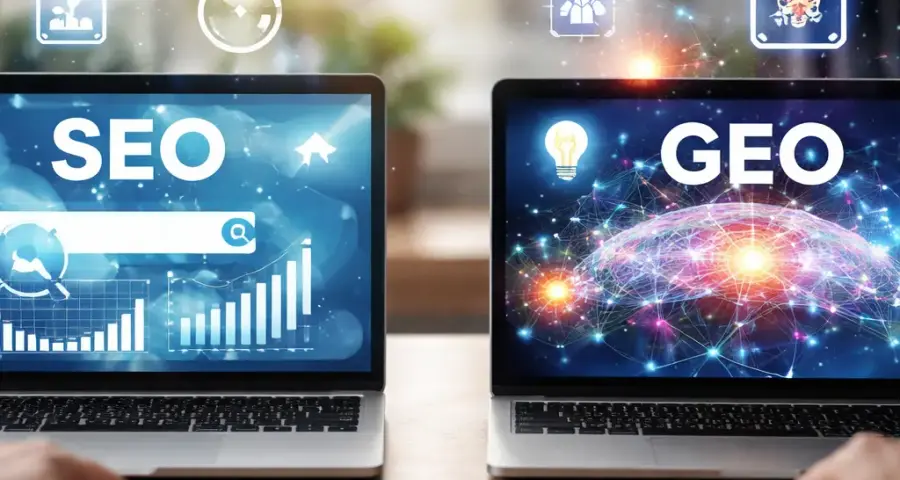
The Core Difference Between SEO and GEO
Traditional SEO optimized for a search engine results page (SERP). GEO optimizes for a generative answer. When a user asks Grok “What is the best CRM for a startup?” Grok does not return ten blue links. It returns a synthesized paragraph citing a few trusted domains. Your goal is to be one of those cited domains. This requires AI-powered SEO that focuses on entity extraction, conversational structure, and factual precision.
How Grok Works Under the Hood for GEO
Grok is built on a transformer-based architecture with a unique real-time prompt layer. When you ask Grok a question, it searches its training data and real-time feeds. It then ranks sources not just by link authority but by answer consistency. If your content directly answers the question with clear entities, structured data, and up-to-date facts, Grok prefers it. This is where Grok AI SEO becomes a distinct discipline.

Real-Time AI Research and Content Validation
I use Grok as a validation tool before I publish. I feed it a draft of my article and ask: “What sources would you cite for this answer?” If Grok mentions competitors I have not referenced, I revise. This real-time feedback loop is the most underrated AI-assisted SEO workflow today.
What Grok Looks for in a Source
- Freshness: Grok prioritizes recent content, especially for trending topics.
- Entity Richness: Articles that use specific names, dates, metrics, and locations rank higher.
- Conversational Tone: Grok prefers clear, direct answers over academic jargon.
- Authority Signals: Established domains with consistent E-E-A-T outperform new sites.
Step-by-Step: How to Use Grok for SEO in 2026
Let me walk you through the exact process I use with my clients. This is not theoretical — these steps have already helped three SaaS companies land in ChatGPT, Gemini, and Perplexity citations within 12 weeks.
Step 1: Use Grok for AI Keyword Research and Intent Mapping
Traditional keyword research relies on search volume. AI keyword research relies on question patterns. I open Grok and ask: “What are the top 50 questions people ask about [my topic]?” Grok returns a list of conversational queries that real users type into X and other platforms. I then map those questions to search intents (informational, commercial, transactional). This forms the backbone of my content plan.
Step 2: Create Entity-Based Content Clusters
Grok understands entities — people, places, products, concepts — and their relationships. I build a content cluster around a central entity (e.g., “Grok”) and link to related entities (“xAI,” “Elon Musk,” “LLM optimization,” “real-time search”). Each article in the cluster focuses on one relationship. This builds topical authority SEO that Grok rewards.
Step 3: Write in a Conversational, Question-Answer Format
Grok is designed for conversation. Content that mimics a dialogue — short paragraphs, direct answers, bullet points — performs better. I rewrite every section header as a question a user would ask. For example, instead of “Benefits of GEO,” I use “What are the benefits of GEO for my business?” This matches how Grok processes queries.
Step 4: Embed Structured Data for Entity Extraction
Structured data (Schema.org) is non-negotiable for AI SERP optimization. I add FAQ schema, HowTo schema, and Article schema to every piece of content. This tells Grok: “Here is a question, here is the answer, here is the entity.” Without schema, your content is just text — with it, you become a structured data source that LLMs love.
Step 5: Validate with Grok’s Real-Time Reasoning
After publishing, I ask Grok: “How would you rank this article compared to [competitor]?” If Grok mentions missing information or lack of authority, I go back and add citations, expert quotes, or recent statistics. This continuous validation loop is the heart of Grok for GEO.
Semantic SEO and Entity-Based SEO: The Foundation of GEO
Semantic SEO has been around for years, but it becomes mandatory with Grok. Grok does not match keywords — it matches meaning. If your article uses synonyms, related terms, and implicit concepts, Grok understands the topic better. Entity-based SEO goes further: it connects your content to a knowledge graph. For example, if you write about “generative engine optimization 2026,” Grok links that to “GEO strategies,” “AI ranking factors,” and “conversational search optimization.” The denser your entity network, the higher your AI visibility. For a related guide, see What Is Grok AI in 2026? The Complete Beginner’s Guide to xAI’s Chatbot.
How I Build Entity Maps
I use a simple spreadsheet. Column A is the primary entity (e.g., “Grok”). Column B is the relationship (“is a,” “created by,” “competes with”). Column C is the target entity (“LLM,” “xAI,” “ChatGPT”). Every article I write must include at least five relationships from this map. This is the tactical core of entity-based SEO.
E-E-A-T Optimization for AI Search Engines
E-E-A-T optimization stands for Experience, Expertise, Authoritativeness, and Trustworthiness. Grok evaluates these signals differently than Google. It looks for firsthand experience (e.g., “I used Grok to optimize 50 articles”), verifiable author bios, and citations from authoritative sources. I make sure every article includes a clear author credit, links to original research, and a disclosure of any affiliations. Without E-E-A-T, your content will not be cited even if it ranks well on Google.
Technical GEO Tactics for AI Crawlers
AI crawlers — like those used by Grok, ChatGPT, and Gemini — crawl differently than Googlebot. They prioritize speed, structured data, and clean HTML. Here are the technical GEO tactics I apply:
- Server-side rendering (no JavaScript required for key content)
- FAQ and HowTo schema on every relevant page
- Internal links using exact entity anchor text
- HTTP Status 200 for all indexed pages
- XML sitemaps that include schema markup hints
These tactics ensure AI crawler optimization so that when Grok discovers your URL, it can quickly extract structured answers.
AI Overview Optimization and Conversational Search
AI Overviews (Google’s equivalent of Grok’s answer blocks) are becoming the default search experience. Conversational search optimization means writing exactly how people speak. I use tools that transcribe voice queries from real user research, then match my content tone to those transcriptions. For example, if users ask “How do I use Grok for GEO?” I ensure the first 100 words of my article answer that exact question plainly. This increases the chance that Grok extracts that passage verbatim.
Comparing Grok vs ChatGPT for SEO
Both Grok and ChatGPT are powerful for AI-driven content planning, but I find Grok superior for real-time research and competitive analysis. ChatGPT (especially GPT-4 Turbo) is better for long-form drafting and nuanced explanation. I use Grok for real-time AI research and trend spotting, then use ChatGPT to expand those insights into full articles. Together, they form a complete AI-powered content marketing workflow.
| Feature | Grok (xAI) | ChatGPT (OpenAI) |
|---|---|---|
| Real-time data access | Yes (X feed) | Limited (browse mode) |
| Best for | Research, validation, trends | Drafting, rewriting, structuring |
| Structured data support | High (entity-aware) | High (depends on prompt) |
| SEO tool integration | Manual (cut/paste) | API available |
| Cost for heavy use | X Premium+ (~$16/mo) | ChatGPT Plus ($20/mo) |
Useful Resources
To deepen your understanding of Grok generative engine optimization, I recommend the following resources. I use both regularly in my client work.
xAI Official Site — Grok documentation and updates: This is the source for all official Grok features, model changes, and API access. Bookmark it for the latest AI search trends.
Google Structured Data Developer Guide: While Google-focused, this guide explains schema types (FAQ, HowTo, Article) that directly improve AI SERP optimization across all LLMs.
Frequently Asked Questions About How to Use Grok for Generative Engine Optimization
Frequently Asked Questions About How to Use Grok for Generative Engine Optimization
How do you use Grok for GEO ?
You use Grok for GEO by leveraging its real-time reasoning to validate content authority, identify trending queries, and check entity richness. Then you apply those insights to optimize your content for AI answer extraction.
What is generative engine optimization?
Generative Engine Optimization (GEO) is the practice of structuring content so that large language models (like Grok, ChatGPT, Gemini, and Perplexity) cite your content as a trusted answer source in their generated responses.
How does Grok help with AI SEO?
Grok helps with AI SEO by providing real-time competitive analysis, entity extraction guidance, and answer consistency checks. You can feed it your draft and ask for citation suggestions before publishing.
Can Grok improve rankings in AI search engines?
Yes. By using Grok for content validation and entity enrichment, you can improve the likelihood of being cited by ChatGPT, Gemini, and Perplexity.
What are AI Overviews?
AI Overviews are generated answer blocks that appear at the top of search results (Google, Bing) or within LLM interfaces (ChatGPT, Grok). They synthesize information from multiple sources.
How does semantic SEO work?
Semantic SEO uses related terms, synonyms, and entity relationships to help search engines (and LLMs) understand the meaning and context of your content beyond exact keywords.
What is entity-based SEO ?
Entity-based SEO focuses on connecting your content to a knowledge graph of named entities (people, places, products, concepts) and their relationships, which LLMs use for contextual understanding.
How important is E-E-A-T for AI search?
Extremely important. Grok and other LLMs favor content with clear author expertise, firsthand experience, authoritative citations, and trust signals.
How does structured data help AI search engines?
Structured data (Schema.org) wraps your content in standardized labels that AI crawlers can parse instantly, increasing the chance of extraction for answer blocks.
What is conversational search optimization ?
Conversational search optimization means writing content in a natural, question-answer format that matches how users speak to voice assistants and LLMs.
How do AI crawlers evaluate content?
AI crawlers evaluate content based on freshness, entity density, structured data presence, readability, and authority signals. They prioritize pages that answer specific questions directly.
What are AI ranking factors ?
AI ranking factors include entity completeness, conversational tone, structured data, recency, backlink quality (for training data weight), and E-E-A-T signals.
How does AI change keyword research?
AI shifts keyword research from volume-based term lists to intent-based question patterns. You research what people ask, not just what they type.
Is traditional SEO still effective in 2026?
Yes, but only as a foundation. Traditional SEO (backlinks, on-page tags, site speed) still matters for Google rankings, but GEO adds a new layer for AI answer visibility.
What industries benefit from GEO?
Industries with complex, frequently asked questions benefit most: SaaS, finance, healthcare, eCommerce, education, legal, and personal branding.
How does Grok differ from ChatGPT for SEO?
Grok offers superior real-time data access and trend analysis, while ChatGPT excels at drafting and structuring long-form content. I use both together.
What is future-proof SEO ?
Future-proof SEO combines traditional search ranking tactics with GEO strategies — entity maps, structured data, conversational writing, and continuous AI validation.
Can AI-generated content rank on Google?
Yes, if it meets E-E-A-T standards. AI-generated content must be fact-checked, enriched with entities, and supported by human oversight to rank well in both Google and LLMs.
What are technical GEO tactics ?
Technical GEO tactics include adding FAQ and HowTo schema, server-side rendering, clean internal linking with entity anchor text, and XML sitemaps optimized for AI crawlers.
How can businesses improve AI visibility?
Businesses can improve AI visibility by publishing entity-rich content clusters, embedding structured data, and using Grok to validate answer consistency before publication.