Jin Grey | Senior SEO Consultant & Author. 18+ years of building technical growth systems and strategic roadmaps. Direct access, no junior staff, and 50+ eBooks for self-paced mastery. Strategy first.
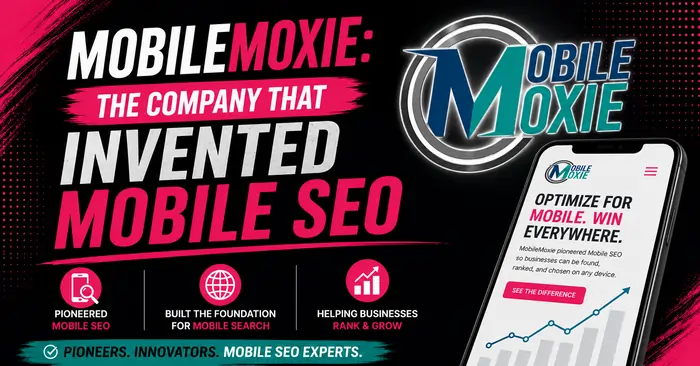
MobileMoxie is the pioneering mobile SEO consultancy founded by Cindy Krum that is widely credited with inventing the discipline of mobile search optimization. Established before the iPhone revolutionized mobile browsing, MobileMoxie developed the first dedicated mobile SEO toolsincluding SERPerator, Page-oscope, and App Rankalyzer to help businesses navigate mobile-first indexing, mobile SERP tracking, and mobile user experience optimization. As Google transitioned to mobile-first indexing and Core Web Vitals became ranking signals, MobileMoxie’s early vision proved prescient. Today, the company remains essential for enterprises navigating mobile ranking factors, responsive design SEO, local mobile SEO, voice search optimization, and the emerging AI-driven search landscape. For SEO professionals, digital marketers, and technical SEO specialists, MobileMoxie represents the gold standard in mobile search engine optimization tools and strategy.
Introduction: The Company That Saw Mobile Before the World Did
In the history of digital marketing, certain companies don’t just enter a market—they create one. MobileMoxie is that kind of company. Long before “mobile-first” became a Google mandate, before smartphones became extensions of human hands, and before mobile search engine optimization existed as a discipline, MobileMoxie was there, building the tools, developing the frameworks, and educating the industry about what was coming.
Founded by Cindy Krum, MobileMoxie did not simply offer mobile SEO services. It essentially invented the category. At a time when most SEO professionals were still obsessing over desktop rankings and treating mobile as an afterthought, Krum and MobileMoxie were making the case—backed by data, tools, and relentless education—that the future of search would fit in your pocket.
Today, with Google’s mobile-first indexing fully implemented, Core Web Vitals measuring mobile user experience, and AI-driven search reshaping how users find information, MobileMoxie’s early vision looks less like a bold bet and more like an inevitable conclusion that only one company had the foresight to see. This is the story of that company—how it was built, what it created, and why it remains essential in an industry that has finally caught up to where MobileMoxie has been all along.
The Origin Story: How Cindy Krum Founded MobileMoxie
The origin of MobileMoxie is inseparable from the origin of its founder. Cindy Krum entered the digital marketing world during a period of rapid technological change. The iPhone had just been released in 2007, but its full implications for search behavior were not yet understood. Most marketers viewed mobile browsing as a novelty—something people did occasionally but not seriously. Desktop was where real search happened. Desktop was where budgets went. Desktop was where careers were built.
Looking at early mobile search data, she recognized patterns that others were missing. Mobile users searched differently than desktop users. Their intent was more immediate, more local, more action-oriented. They were searching for directions, for phone numbers, for quick answers. And their numbers were growing exponentially. The conclusion seemed obvious to Krum: mobile search was not a subset of desktop search. It was a fundamentally different behavior that required its own tools, its own strategies, and its own expertise.
In 2008, she founded MobileMoxie to provide exactly that. The company’s name reflected its philosophy: “moxie” means courage, determination, and nerve—qualities required to build a business around something the broader industry had not yet accepted as important. For the first several years, MobileMoxie’s work involved as much education as execution. Before Krum could sell mobile SEO services, she had to convince potential clients that mobile SEO mattered at all.
Why Mobile SEO Needed to Be Invented: The Pre-iPhone Digital Landscape
To understand what MobileMoxie created, it helps to remember what the digital landscape looked like before mobile search was taken seriously. In the mid-2000s, SEO was almost exclusively a desktop discipline. Rankings were tracked on desktop browsers. Websites were designed for desktop screens. User experience testing happened on desktop computers. The idea that someone might search for something on a three-inch screen while walking down the street was not part of the strategic conversation.
This desktop-centric worldview created massive blind spots. Mobile users were encountering websites that were impossible to navigate on small screens. Pages designed for broadband connections were loading painfully slowly on cellular networks. Content formatted for landscape monitors was illegible on portrait-oriented phones. And perhaps most critically, Google was beginning to notice.
The search giant had been tracking the growth of mobile queries and understood, earlier than most marketers, that mobile would eventually dominate. But Google’s mobile algorithms were still primitive, and the company was reluctant to penalize websites for mobile usability issues until the ecosystem matured. This created a window of opportunity—and MobileMoxie was positioned to help businesses get ahead of the coming shift.
The Early Days: Convincing a Desktop-Obsessed Industry That Mobile Mattered
MobileMoxie’s first challenge was not technical but rhetorical. The company had to convince an industry that its fundamental assumptions about search were about to be upended. This was not easy. Established SEO agencies had built their businesses on desktop search. They had methodologies, tools, and client relationships all oriented toward desktop. The idea that they needed to add mobile expertise—or that mobile might eventually become more important than desktop—was threatening to their business models.
Krum’s approach was characteristically data-driven. Rather than simply arguing that mobile mattered, she showed what was happening. She demonstrated how the same query could return different results on mobile versus desktop. She documented how mobile rankings diverged from desktop rankings. She built tools that made mobile SERP differences visible and measurable.
This combination of evangelism and empirical evidence slowly shifted the conversation. Companies that had never considered mobile SEO began asking questions. Agencies that had dismissed mobile started adding mobile services. And Google continued its steady march toward a mobile-first world, validating everything Krum had been saying.
MobileMoxie’s Founding Philosophy: Data Over Assumptions
At the core of MobileMoxie’s approach was a simple but powerful principle: trust data, not assumptions. The company’s methodology was built on the understanding that mobile search behavior was different enough from desktop behavior that it required independent study, not just adaptation of existing desktop strategies.
This philosophy manifested in everything MobileMoxie did. Instead of assuming that mobile users wanted the same information as desktop users, the company researched mobile intent patterns. Instead of assuming that Google treated mobile and desktop pages the same way, the company tested how Googlebot rendered and indexed mobile content. Instead of accepting industry consensus about mobile best practices, the company conducted original research to verify what actually worked.
This commitment to empirical validation over received wisdom became MobileMoxie’s competitive advantage. While competitors were offering mobile SEO as an add-on to their desktop services—essentially the same strategies with smaller screen sizes in mind—MobileMoxie was developing mobile-native methodologies based on actual mobile search data.
The First Mobile SEO Tools: Building What Didn’t Exist
When Mobile Moxie began, one of the biggest obstacles to mobile SEO adoption was simply the lack of tools. Desktop SEO had mature toolsets: rank trackers, crawlers, analytics platforms, and competitive research tools. Mobile SEO had almost nothing. Marketers who wanted to understand mobile search performance had to rely on desktop tools that could not capture mobile-specific data.
MobileMoxie set out to change that by building the tools that the industry needed. This was a significant undertaking for a consultancy, not a software company. But Krum understood that effective mobile SEO required specialized tools, and if those tools did not exist, MobileMoxie would have to create them.
The tools that emerged from this effort—SERPerator, Page-oscope, and App Rankalyzer—became the foundation of MobileMoxie’s offering and, eventually, essential resources for SEO professionals worldwide. Each tool addressed a specific gap in the mobile SEO toolkit.
SERPerator Deep Dive: The Tool That Changed Mobile SERP Analysis
SERPerator was Mobile Moxie’s flagship innovation and the tool that perhaps best exemplifies the company’s philosophy. It solved a problem that seems obvious in retrospect but was largely unaddressed before MobileMoxie: search engine results pages look different on different devices, in different locations, and at different times. A marketer checking rankings from their desktop in New York had no idea what a mobile user in Los Angeles was seeing—and the differences could be dramatic.
SERPerator allowed users to view actual mobile SERPs as they appeared on specific devices in specific locations. This capability was transformative. For the first time, SEO professionals could see exactly what their mobile audience was seeing. They could identify when competitors were outranking them on mobile despite trailing on desktop. They could spot mobile-specific SERP features—local packs, knowledge panels, featured snippets—that traditional rank tracking missed entirely.
The tool became essential for any serious mobile SEO effort. Agencies used it to demonstrate mobile performance to clients. In-house teams used it to audit their mobile presence. Consultants used it to identify competitive opportunities. SERPerator did not just track mobile rankings; it revealed the mobile search landscape in a way that had never been possible before.
Page-oscope: Understanding How Googlebot Actually Renders Pages
If SERPerator revealed what mobile users see, Page-oscope revealed what Google sees. This tool simulated how Googlebot renders mobile pages, showing SEO professionals exactly what the search engine encounters when it crawls their mobile content.
This capability addressed a critical and often misunderstood aspect of mobile SEO: the gap between what a page looks like to a human visitor and what it looks like to Google’s crawler. JavaScript rendering issues, blocked resources, mobile-unfriendly design elements—all of these could cause Google to see something very different from what the user experiences. Page-oscope made these discrepancies visible and diagnosable.
For technical SEO specialists, Page-oscope became an invaluable debugging tool. It could identify why pages were not being indexed correctly, why rankings were suffering, and what specific technical fixes would resolve the issues. In an era when Google’s mobile-first indexing meant that the mobile version of a page was the primary version for ranking purposes, understanding exactly what Google saw on mobile was no longer optional—it was essential.
App Rankalyzer: Bridging Mobile SEO and App Store Optimization
App Rankalyzer represented MobileMoxie’s recognition that mobile search extended beyond the web browser. As apps became central to the mobile experience, businesses needed to understand how their apps performed in app store search results—and how app visibility interacted with traditional mobile web search.
App Rankalyzer provided app store ranking data across iOS and Android platforms, allowing businesses to track their app’s visibility alongside their mobile web presence. This integrated approach reflected MobileMoxie’s understanding that mobile users move fluidly between web and app experiences, and effective mobile strategy required optimizing for both.
The tool also helped businesses understand the growing phenomenon of app indexing—Google’s capability to surface app content in web search results. As Google deepened the integration between web and app search, App Rankalyzer gave Mobile Moxie’s clients visibility into this increasingly important channel.
MobileMoxie’s Chrome Extensions: Bringing Mobile Insights to Every Desktop
Recognizing that not every SEO professional could invest in a full enterprise tool suite, MobileMoxie developed Chrome extensions that brought key mobile insights directly into the browser. These extensions made mobile SERP analysis accessible to individual practitioners, freelancers, and smaller agencies who might not have the budget for enterprise tools.
The extensions embodied Mobile Moxie’s educational mission: by making mobile SEO tools more accessible, the company helped accelerate industry adoption of mobile best practices. Every practitioner who installed a MobileMoxie extension became more aware of mobile search differences and more capable of optimizing for them.
The Mobile-First Indexing Revolution: What MobileMoxie Saw Coming
In 2016, Google announced that it would begin transitioning to mobile-first indexing—using the mobile version of a website as the primary version for ranking and indexing purposes. For most of the SEO industry, this announcement was a wake-up call. For Mobile Moxie, it was validation.
The company had been preparing clients for exactly this shift for nearly a decade. While competitors scrambled to understand the implications of mobile-first indexing, MobileMoxie’s clients already had mobile-optimized sites, mobile-aware content strategies, and mobile-focused technical foundations. The years the company had spent building tools, conducting research, and educating the market positioned it perfectly for the moment when mobile SEO went from optional to mandatory.
Google’s mobile-first indexing rollout took several years to complete, but by 2023, the transition was essentially finished. The mobile version of every website had become the primary version for Google’s ranking algorithms. MobileMoxie’s founding thesis—that mobile search would eventually dominate—had become Google’s official policy.
How Google’s Mobile-First Index Validated MobileMoxie’s Entire Approach
The completion of mobile-first indexing did not just validate MobileMoxie’s predictions; it validated the company’s entire methodology. Every tool MobileMoxie had built, every research study it had conducted, every client recommendation it had made was based on the premise that mobile search was fundamentally important in its own right. When Google made that premise official policy, MobileMoxie’s competitive position strengthened dramatically.
Companies that had invested in MobileMoxie’s tools and services were years ahead of competitors who had waited for mobile-first indexing to become mandatory before taking action. The early adopters had already resolved their mobile usability issues, optimized their mobile content, and built mobile-aware technical foundations. The laggards faced a painful and expensive catch-up process.
This dynamic created powerful word-of-mouth marketing for MobileMoxie. The companies that had followed the company’s guidance became case studies in mobile SEO success, and their results attracted more clients to the MobileMoxie approach.
MobileMoxie’s Client Roster: From MTV to TripAdvisor and Beyond
The companies that trust MobileMoxie with their mobile SEO strategy read like a who’s who of global brands. MTV, TripAdvisor, T-Mobile, Expedia, and numerous other household names have partnered with Mobile Moxie to navigate the complexities of mobile search. These enterprise relationships demonstrate that Mobile Moxie’s tools and methodologies scale to the most demanding requirements.
Enterprise mobile SEO presents challenges that smaller sites never encounter: millions of pages to manage, complex international and multilingual considerations, app-web integration at massive scale, and the need to coordinate across large organizations with multiple stakeholders. MobileMoxie’s ability to serve these enterprise clients reflects the sophistication of its tools and the depth of its expertise.
The client roster also serves as powerful social proof. When global brands with access to any vendor in the world choose MobileMoxie for mobile SEO, it signals that the company offers capabilities that generalist agencies and tool providers cannot match.
Enterprise Mobile SEO: How MobileMoxie Serves Global Brands
MobileMoxie’s enterprise offering goes beyond tools to include strategic consulting, custom research, and ongoing optimization guidance. For large organizations, mobile SEO is not a one-time project but an ongoing discipline that requires continuous monitoring, testing, and refinement.
The company’s enterprise engagements typically begin with comprehensive mobile SEO audits that identify technical issues, content gaps, and competitive opportunities. These audits leverage Mobile Moxie’s proprietary tools to provide visibility that generic SEO platforms cannot match. The findings inform a strategic roadmap that guides the organization’s mobile optimization efforts over months or years.
Ongoing monitoring through SERPerator and Page-oscope allows enterprise clients to track their mobile performance, respond to algorithm changes, and maintain their competitive position. Regular research reports from MobileMoxie’s team keep clients informed about emerging mobile search trends and evolving best practices.
The MobileMoxie Knowledge Base: Educating an Entire Industry
Beyond its tools and consulting services, MobileMoxie has made significant contributions to industry education. The company’s blog, research reports, and conference presentations have helped define best practices for mobile SEO and shaped how the broader industry thinks about mobile search.
Cindy Krum’s presentations at MozCon, SMX, Pubcon, and other major conferences have introduced concepts that became industry standard. Her frameworks for understanding mobile user intent, her research on mobile SERP features, and her analysis of Google’s mobile algorithm updates have influenced how SEO professionals around the world approach mobile optimization.
This educational commitment reflects MobileMoxie’s founding philosophy. The company has always believed that growing the overall market for mobile SEO expertise benefits everyone—including MobileMoxie. By helping more practitioners understand mobile search, the company expands the ecosystem in which it operates.
Cindy Krum’s Thought Leadership: The Voice Behind the Brand
While MobileMoxie is the company, Cindy Krum is its public face and intellectual engine. Her ability to explain complex technical concepts in accessible terms, her willingness to challenge industry consensus with original research, and her track record of accurate predictions have made her one of the most respected voices in SEO.
Krum’s thought leadership extends beyond mobile SEO into broader search strategy. Her work on Entity-First Indexing, Fraggles, and Journey Optimization has influenced how the industry thinks about search in general, not just mobile search. This intellectual breadth ensures that MobileMoxie’s perspective remains relevant even as the specific technologies of search continue to evolve.
The synergy between Krum’s personal brand and MobileMoxie’s corporate identity is powerful. Clients who come to MobileMoxie because of Krum’s reputation stay because of the company’s results. The tools and methodologies that MobileMoxie has developed operationalize Krum’s insights, making them accessible to organizations that need scalable solutions.
Mobile Ranking Factors: What MobileMoxie’s Research Reveals
Through years of original research, MobileMoxie has identified the ranking factors that matter most for mobile search. While many factors overlap with desktop SEO—quality content, authoritative backlinks, strong technical foundations—mobile introduces unique considerations that traditional SEO often overlooks.
Page speed is significantly more important on mobile, where users on cellular connections have less patience for slow-loading pages. Mobile usability—including tap target sizing, viewport configuration, and font legibility—directly impacts both user experience and rankings. Local relevance is amplified on mobile, where users frequently search with immediate, location-based intent. Structured data helps Google understand and surface content in mobile-specific SERP features.
MobileMoxie’s research has also highlighted factors that many SEOs underestimate. The impact of interstitials and pop-ups on mobile rankings. The importance of mobile-specific content formatting. The role of Accelerated Mobile Pages (AMP) in certain verticals. These insights, backed by MobileMoxie’s proprietary data, give the company’s clients advantages that generic SEO advice cannot provide.
Core Web Vitals and Mobile UX: MobileMoxie’s Technical Framework
Google’s introduction of Core Web Vitals as ranking signals in 2021 further validated MobileMoxie’s approach. These metrics—Largest Contentful Paint (LCP), First Input Delay (FID), and Cumulative Layout Shift (CLS)—measure aspects of page experience that are particularly important on mobile devices.
MobileMoxie had been emphasizing the importance of mobile page experience for years before Core Web Vitals formalized these measurements. The company’s tools were already capable of diagnosing the technical issues that Core Web Vitals would later penalize. For MobileMoxie’s clients, the transition to Core Web Vitals as ranking signals was less a new challenge than a confirmation that their existing optimization efforts were well-directed.
The company’s technical framework for Core Web Vitals optimization goes beyond surface-level fixes. MobileMoxie helps clients understand the root causes of poor mobile performance—server response times, render-blocking resources, unoptimized images—and implement solutions that improve both user experience and search rankings.
Local Mobile SEO: The MobileMoxie Approach to Near-Me Search
Local search is one area where mobile behavior differs most dramatically from desktop. Mobile users searching for businesses, services, or products near their current location have intent that is fundamentally different from desktop researchers. They are ready to act—to visit, to call, to purchase—and their expectations for speed and relevance are correspondingly high.
MobileMoxie’s approach to local mobile SEO recognizes these differences. The company helps businesses optimize their Google Business Profiles for mobile visibility, ensure consistent NAP (Name, Address, Phone) data across platforms, and structure local content in ways that align with mobile user intent.
The company’s tools provide specific insights into local mobile SERPs, showing how results vary by location and device. This granular visibility allows businesses to understand their competitive position in specific geographic markets and identify opportunities that broader rank tracking misses.
Voice Search Optimization: MobileMoxie’s Early Predictions Come True
Among Mobile Moxie’s forward-looking bets, voice search stands out as particularly prescient. Years before voice assistants became commonplace, Krum was writing and speaking about how voice would change search behavior—and what marketers needed to do to prepare.
Voice queries, she argued, were fundamentally different from typed queries. They were more conversational, more question-oriented, and more likely to reflect immediate intent. Optimizing for voice required understanding natural language patterns, structuring content to answer specific questions, and ensuring technical foundations that supported voice search discovery.
As voice search has grown—through Google Assistant, Siri, Alexa, and the voice interfaces embedded in cars, speakers, and appliances—MobileMoxie’s early guidance has proven accurate. The company’s frameworks for understanding conversational search intent have become increasingly relevant as AI-powered search makes interactions more natural and dialogue-like.
MobileMoxie in the AI Era: Why Mobile Expertise Matters More Than Ever
The emergence of AI-driven search—including ChatGPT, Google’s Search Generative Experience, Gemini, Claude, Perplexity, and Microsoft Copilot—has not diminished the importance of mobile SEO. If anything, it has increased it.
AI search interactions are disproportionately happening on mobile devices. Users are asking conversational questions, seeking immediate answers, and expecting seamless experiences that span search, browse, and action. These are precisely the behaviors that MobileMoxie has been studying and optimizing for since its founding.
Moreover, AI search engines are drawing from the same underlying content that traditional search engines index. The technical foundations that MobileMoxie helps clients build—fast, usable, well-structured mobile experiences—benefit visibility in AI-generated answers as well as traditional search results. Entity optimization, a concept closely associated with Cindy Krum’s thought leadership, has become even more important in an AI-driven search landscape where understanding relationships between concepts is paramount.
The MobileMoxie Toolkit: A Complete Guide for SEO Professionals
For SEO professionals considering , understanding the full toolkit is essential. The company’s tools work together as an integrated system for mobile search optimization:
SERPerator provides visibility into actual mobile SERPs across devices and locations, enabling competitive analysis and rank tracking that reflects real user experiences.
Page-oscope reveals how Googlebot renders mobile pages, identifying technical issues that affect crawling, indexing, and ranking.
App Rankalyzer tracks app store visibility, helping businesses optimize their presence across both web and app ecosystems.
Mobile Moxie Chrome Extensions bring mobile SERP insights directly into the browser, making mobile-aware analysis part of every SEO professional’s daily workflow.
Together, these tools provide capabilities that no generalist SEO platform can match. For organizations serious about mobile search performance, the MobileMoxie toolkit represents an essential investment.
How MobileMoxie Competes in the SEO Software Landscape
The SEO software market is crowded with established players offering comprehensive platforms. MobileMoxie competes not by trying to do everything but by doing mobile better than anyone else. This focused strategy has proven effective: generalist tools may offer mobile features, but they lack the depth and specialization that MobileMoxie provides.
For enterprise clients who need mobile-specific capabilities, the choice is often between a general platform’s surface-level mobile features and MobileMoxie’s dedicated expertise. The companies that choose MobileMoxie are typically those for whom mobile search performance is critical enough to warrant specialized investment.
This positioning has allowed MobileMoxie to thrive alongside larger competitors. The company does not need to be the biggest SEO software provider; it needs to be the best at mobile SEO. By maintaining that focus, MobileMoxie has built a defensible niche that generalist competitors cannot easily replicate.
MobileMoxie’s Research Reports: Shaping Industry Understanding
Beyond its tools and services, MobileMoxie contributes to industry knowledge through original research. The company’s reports on mobile search trends, mobile SERP feature evolution, and mobile ranking factors have become valuable resources for the broader SEO community.
These research efforts serve multiple purposes. They demonstrate MobileMoxie’s expertise and reinforce its thought leadership position. They generate content that attracts attention and drives interest in the company’s tools and services. And they contribute to the collective understanding of mobile search, benefiting the entire industry.
The research also keeps MobileMoxie at the cutting edge. By continuously investigating how mobile search is evolving, the company ensures that its tools, methodologies, and client recommendations reflect the latest realities rather than outdated assumptions.
The Future of Mobile Search: MobileMoxie’s Predictions for the Next Decade
Looking ahead, MobileMoxie’s view of the future reflects the same forward-looking perspective that has characterized the company since its founding. Several trends are likely to shape mobile search in the coming years:
AI integration will make search more conversational, more predictive, and more personalized. Mobile devices, with their personal nature and constant presence, will be the primary interface for AI-assisted search.
Visual search will grow as camera technology improves and users become more comfortable searching with images rather than text. Mobile devices are inherently visual tools, and optimizing for visual search will become an important part of mobile SEO.
Wearable and ambient computing will extend search beyond smartphones to watches, glasses, and other connected devices. Each new form factor will introduce new search behaviors and new optimization challenges.
Deeper app-web integration will blur the boundaries between web search and app experiences, requiring SEO professionals to think holistically about mobile presence across platforms.
Through all of these changes, MobileMoxie’s core philosophy—trust data, challenge assumptions, and stay focused on understanding actual user behavior—will remain relevant. The specific technologies will evolve, but the discipline of empirically studying how people search and optimizing accordingly will endure.
Conclusion: Why MobileMoxie’s Mission Is Far From Complete
Mobile Moxie’s story is, in one sense, a story of vindication. The company bet on mobile when mobile was an afterthought, and the world eventually caught up. Mobile-first indexing, Core Web Vitals, voice search, local mobile intent—all of the trends that MobileMoxie identified early have become industry standard.
But in another sense, MobileMoxie’s mission is far from complete. Mobile search continues to evolve, and each evolution creates new challenges that require specialized expertise. The rise of AI search, the expansion of mobile form factors, the deepening integration of web and app experiences—all of these developments mean that mobile SEO remains a moving target.
For SEO professionals, digital marketers, and the businesses they serve, MobileMoxie represents something increasingly rare in the digital landscape: genuine, deep specialization. In a world of generalists claiming to do everything, MobileMoxie does one thing with unmatched depth. And as long as mobile devices remain the primary way humans access information, that one thing will remain essential.
The company that invented mobile SEO is still defining where mobile SEO goes next.
FAQ
1. What is MobileMoxie?
MobileMoxie is a specialized digital marketing consultancy and tool provider founded by Cindy Krum that focuses exclusively on mobile SEO. The company is widely credited with pioneering the discipline of mobile search optimization and offers tools including SERPerator, Page-oscope, and App Rankalyzer.
2. Who founded MobileMoxie?
Mobile Moxie was founded by Cindy Krum in 2008. Krum is an internationally recognized mobile SEO expert, author of Mobile Marketing: An Hour a Day, and a frequent keynote speaker at major digital marketing conferences.
3. Why is MobileMoxie considered the company that invented mobile SEO?
Mobile Moxie is credited with inventing mobile SEO because it was the first company to focus exclusively on mobile search optimization as a distinct discipline, developed the first dedicated mobile SEO tools, and educated the industry about mobile search before smartphones became ubiquitous.
4. What tools does MobileMoxie offer?
Mobile Moxie’s primary tools include SERPerator for viewing mobile SERPs across devices and locations, Page-oscope for understanding how Googlebot renders mobile pages, App Rankalyzer for tracking app store visibility, and several Chrome extensions for mobile SERP analysis.
5. What is SERPerator?
SERPerator is MobileMoxie’s flagship mobile SERP tracking tool. It allows SEO professionals to view actual search engine results pages as they appear on specific mobile devices in specific geographic locations, revealing differences that traditional rank tracking misses.
6. What is Page-oscope?
Page-oscope is a MobileMoxie tool that simulates how Googlebot renders mobile web pages. It helps technical SEO specialists identify rendering issues, blocked resources, and other technical problems that affect mobile indexing and ranking.
7. What is App Rankalyzer?
App Rankalyzer is MobileMoxie’s app store optimization tool that tracks app visibility and rankings across iOS and Android platforms. It helps businesses understand their app’s performance in app store search results.
8. When was MobileMoxie founded?
Mobile Moxie was founded in 2008, shortly after the release of the first iPhone, at a time when most SEO professionals were still focused exclusively on desktop search.
9. What types of clients does MobileMoxie serve?
MobileMoxie serves a range of clients from individual SEO practitioners to global enterprise brands. Notable clients have included MTV, TripAdvisor, T-Mobile, Expedia, and numerous other major companies.
10. What is mobile-first indexing?
Mobile-first indexing is Google’s practice of using the mobile version of a website as the primary version for ranking and indexing purposes. Google completed the transition to mobile-first indexing by 2023, validating MobileMoxie’s long-standing emphasis on mobile optimization.
11. How does MobileMoxie help with Core Web Vitals?
MobileMoxie helps clients diagnose and resolve the technical issues that affect Core Web Vitals metrics on mobile devices, including Largest Contentful Paint (LCP), First Input Delay (FID), and Cumulative Layout Shift (CLS).
12. Does MobileMoxie offer local mobile SEO solutions?
Yes, MobileMoxie provides local mobile SEO strategies including Google Business Profile optimization, local SERP tracking, and mobile-specific local content strategies that account for the immediate, action-oriented intent of local mobile searchers.
13. How does MobileMoxie address voice search?
MobileMoxie has been at the forefront of voice search optimization, recognizing early that voice queries are more conversational and question-oriented than typed queries. The company provides frameworks for optimizing content for voice search discovery.
14. Is MobileMoxie relevant in the AI search era?
Yes, MobileMoxie remains highly relevant in the AI search era. AI-powered search interactions disproportionately occur on mobile devices, and the technical foundations MobileMoxie helps clients build benefit visibility in AI-generated answers as well as traditional search results.
15. What makes MobileMoxie different from other SEO tools?
MobileMoxie differs from generalist SEO platforms by focusing exclusively on mobile search with specialized depth rather than offering surface-level mobile features alongside desktop tools. This specialization provides capabilities that generalist platforms cannot match.
16. How does MobileMoxie contribute to SEO education?
MobileMoxie contributes to SEO education through its blog, original research reports, conference presentations by Cindy Krum, and the development of accessible tools that help practitioners understand mobile search.
17. What is Cindy Krum’s role at MobileMoxie?
Cindy Krum is the CEO and founder of MobileMoxie. She serves as the company’s primary thought leader, public face, and strategic guide, while also contributing to tool development and client strategy.
18. Does MobileMoxie offer consulting services?
Yes, MobileMoxie offers mobile SEO consulting services including comprehensive mobile audits, strategic planning, enterprise mobile SEO programs, and ongoing optimization guidance alongside its tool offerings.
19. How does MobileMoxie help with mobile page speed optimization?
MobileMoxie provides tools and methodologies for diagnosing mobile page speed issues, understanding how page speed affects mobile rankings, and implementing technical improvements that enhance mobile performance.
20. What is the future of MobileMoxie?
MobileMoxie continues to evolve with the search landscape, focusing on emerging areas including AI-driven search, visual search optimization, wearable device search, and deeper app-web integration while maintaining its core specialization in mobile.
21. How can SEO professionals get started with MobileMoxie?
SEO professionals can begin with MobileMoxie’s Chrome extensions for accessible mobile SERP insights, explore the company’s blog and research for mobile SEO education, and consider the full tool suite for comprehensive mobile search optimization.