

How to Design ChatGPT Inspired Website?
Designing Your Authority Website With ChatGPT: The 2026 Premium Personal Brand Blueprint for Experts Who Refuse to Look Average
Most experts don’t have a “website problem.”
They have a positioning problem disguised as a website.
If your site looks “nice” but fails to attract serious clients, book strategy calls, or position you as the obvious authority in your niche, the issue is not your theme, colors, or page builder. It is the way your brand is framed, structured, and presented online.
In 2026, your website is no longer just a digital brochure. It is your:
- Positioning engine
- First and strongest impression
- Silent salesperson
- Digital headquarters for your entire personal brand
When that foundation is weak, no amount of visual polish can fix it. Confused positioning creates confused design — and confused design does not convert.
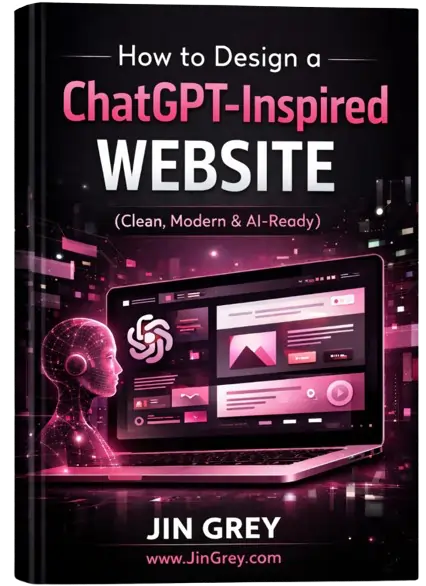
My new ebook, “Designing Your Authority Website With GPT: The 2026 Premium Personal Brand Blueprint,” shows you how to use GPT not as a trendy toy, but as a strategic partner to build a premium, high-authority personal brand site using WordPress + Elementor.
Not trendy.
Not cute.
Authority.
Why Your Website Is Not “Just a Website”
Most people open a page builder and start dragging blocks until it “looks okay.” That’s how you end up with a pretty homepage that secretly repels serious clients.
Your website is:
- Your positioning in visual form
- Your reputation compressed into a single scroll
- The filter that decides who takes you seriously and who doesn’t
This ebook treats your site as leverage, not decoration. You’ll learn how to architect a digital presence that commands respect from the first second, before anyone reads a case study or portfolio item.
Authority First: Clarify Who You Are (Before You Touch WordPress)
Before you install a theme, pick fonts, or obsess over sections, you go to GPT. But you don’t ask for design—you ask for identity.
Example:
“I am a senior SEO consultant with 18+ years experience. I am an author and mentor. I am not an agency. Help me clarify my positioning.”
One simple prompt like this can completely realign your brand.
From there, your positioning becomes crystal clear:
- SEO Consultant
- Digital Growth Strategist
- Author
- Mentor
- Personal Brand
Not:
- SEO agency
- Marketing company
- Team-based service
Once this foundation is set, design becomes execution, not guesswork. This is personal authority branding, not generic “services website” design.
In the ebook, I give you strategic prompts you can copy, paste, and customize so GPT helps you define who you are in the market—before a single pixel is designed.
The Psychology of Premium Design: Why Restraint Wins
Premium is not about adding more. It’s about removing noise.
Authority websites follow a different rulebook:
- Limited color palette
- Strong contrast
- Bold, confident typography
- Intentional space between sections
- One dominant call-to-action
Cheap websites do the opposite:
- Too many colors
- Too many buttons
- Too many fonts
- Too much information thrown at the user at once
Premium sites feel intentional. Cheap sites feel desperate. That one shift in psychology changes how you design everything—from your hero section to your footer.
Inside the ebook, I walk you through exactly how to apply this restraint-based design mindset to your own brand so your site looks like it belongs to a top-tier expert, not a template library.
The Pink + Black Power Framework: Feminine Strength Meets Executive Edge
One of the visual frameworks I break down in the book is the Pink + Black Power palette. When executed correctly, it blends feminine strength, executive edge, and digital precision in a single glance.
Most people ruin it by going pastel, soft, or bubblegum. Authority brands never do that. They use power tones.
Inside, you’ll get the exact premium hex codes:
- Power Pink: FF2E93
- Deep Pink: DB006A
- Deep Black: 0D0D0D
- Charcoal: 1A1A1A
- Pure White: FFFFFF
- Light Gray: F5F5F7
The logic is simple:
- Black = Authority
- Pink = Controlled Power
- White = Clarity
Together, they send a clear message: you’re not “cute,” you’re in control.
Building an Authority Header That Commands Respect in 3 Seconds
Your header is your first perception test. In 3 seconds, people decide if you’re premium, average, or forgettable.
I walk you step-by-step through a proven structure using Elementor Flexbox:
- Logo: 20%
- Menu: 50%
- CTA button: 30%
- Total: 100%
For desktop, a sticky header is non-negotiable. Your CTA button is designed to stand out without looking like a bubbly “influencer” badge:
- Background: Power Pink
- Text: White
- Hover: Deep Pink
- Clean edges—not cartoon-style rounded pills
This is executive positioning, not a lifestyle blog. The ebook shows the exact layout logic, examples, and how to implement it inside Elementor.
Menu Strategy: Simplicity That Feels High-End
Your menu is not your sitemap. It’s your guided path for serious visitors.
Instead of stuffing it with every page you’ve ever created, I teach you a lean, authority-driven structure such as:
- Home
- About
- Consulting
- Mentorship
- eBooks
- Blog
Lean menus feel confident. Bloated menus feel insecure. The book shows you how to trim, rename, and reorganize so your navigation feels like a curated experience, not a directory.
The Conversion CTA Formula: One Decision, Not Ten
Authority brands don’t beg. They direct.
You don’t need seven different CTAs. You need one dominant action you want serious clients to take, such as:
- Book a Strategy Call
- Work With Me
- Apply for Mentorship
What you don’t need:
- Contact
- Learn More
- Get Started
- Download Now
- Subscribe
- Free Guide
Too many options equals no decision. In the ebook, I break down how to choose, word, and design your primary CTA so it feels decisive and aligned with your business model.
Responsive or Invisible: Why Mobile Design Is Non-Negotiable
If your site falls apart on mobile, your authority drops instantly.
This book gives you a simple responsive checklist:
- Sticky header on desktop
- Clean hamburger menu on mobile
- CTA always visible
- No oversized logo
- No broken spacing or misaligned sections
You’ll learn how to adjust tablet breakpoints, simplify mobile layouts, and test your design so it looks like a premium brand at every screen size. If it breaks, it’s not premium—and I show you how to fix it.
The Footer: The Most Underused Authority Asset on Your Site
Most experts treat the footer like a dumping ground. That’s a mistake.
In this blueprint, your footer becomes an extension of your authority:
- Same background tone or texture as the header
- Repeat your main CTA
- Minimal, curated navigation
- Clean copyright and legal line
Then you apply it site-wide. Consistency builds subconscious authority, and the book walks you through the exact setup and display conditions.
Homepage Structure That Sells Authority (Not Just Services)
The ebook gives you a plug-and-play homepage structure designed specifically for senior consultants, strategists, and personal brands.
You’ll learn how to build:
- Hero section
- Name
- Title
- Years of experience
- One strong CTA
Example:
“Senior SEO Consultant. Digital Growth Strategist. 18+ Years Building Authority Brands.”
- Proof numbers section
- Years of experience
- Revenue milestones
- Project count
- Author status
- Core offers section (maximum three)
- SEO Consulting
- Digital Marketing Strategy
- 1:1 Mentorship
- Books & intellectual assets
- Show covers
- Show titles
- Show that you are a builder of ideas, not just a service provider
I show you how to translate this into Elementor layouts step-by-step so your homepage does the heavy lifting for your authority.
ChatGPT as Your Silent Design Strategist (Not Your Designer)
GPT is not your designer. It is your:
- Positioning assistant
- Color advisor
- Layout clarifier
- Background concept generator
- Messaging refiner
The ebook gives you high-leverage prompts you can use immediately, including:
- Positioning prompt to clarify your role and authority
- Color strategy prompt to build a premium palette
- Homepage layout prompt for a high-authority consultant site
- CTA optimization prompt for serious clients
Bad prompt = bad output. Strategic prompt = premium direction. You’ll learn how to guide GPT so it amplifies your thinking instead of replacing it.
The Final Authority Checklist (Before You Go Live)
Before launch, you’ll walk through a simple but ruthless checklist:
- Is my positioning crystal clear?
- Does my design reflect authority or confusion?
- Are my colors consistent?
- Is my CTA dominant and obvious?
- Is mobile clean and responsive?
- Does my footer visually match my header?
- Is my homepage structured with intention, not guesswork?
If any answer is “maybe,” you fix it. Authority does not guess.
Who This Blueprint Is For
This ebook is written for:
- Senior consultants and strategists who are done looking average online
- Experts who are not agencies but want agency-level positioning
- Personal brands who sell consulting, mentorship, and intellectual assets like eBooks and frameworks
You don’t need to “be a designer.” You need a system. This is that system—designed specifically for experts who want their website to finally match their real-world authority.