
It was 7:32 AM on March 28, 2026.
I poured my coffee, opened Google Analytics, and felt my stomach hit the floor.
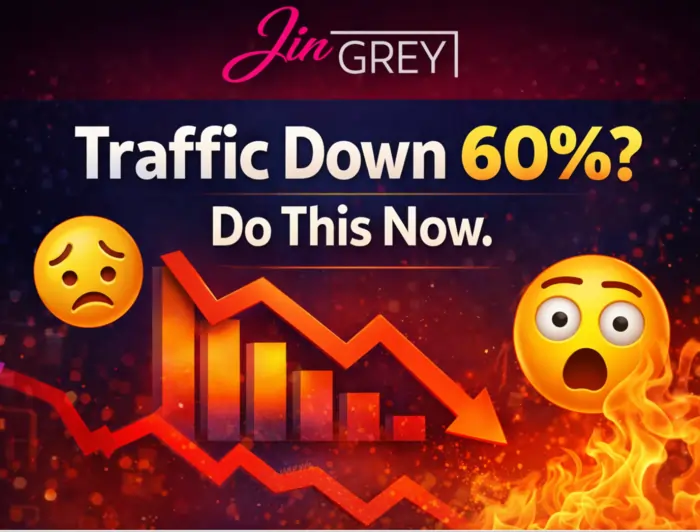
Overnight, my organic traffic dropped 60%.
No warning. No manual action notice. Just a cliff.
Over the next 72 hours, I panicked, researched, tested, and eventually clawed my way back. Today, I’m sharing exactly what happened, why it happened, and the step-by-step recovery plan that brought my traffic back.
If you’re seeing a sudden SEO traffic loss right now, you are not alone. And you can fix it.
Part 1: What Happened – The March 2026 Google Core Update
On March 27, 2026, Google released a core update that fundamentally changed how search works.
But that wasn’t the only hit.
Just days earlier, Google had rolled out the fastest spam update ever – completed in just 24 hours – targeting low-quality AI-generated content and scraped pages.
My site got caught in the crossfire.
Why did my traffic drop?
After digging through data, I found three specific problems:
- AI Overviews were answering my target queries directly – users never needed to click through.
- My content was “thin” by 2026 standards – informative, but lacking original data and firsthand experience.
- AI models (ChatGPT, Gemini, Perplexity) weren’t citing me – they were citing Reddit, Quora, and larger competitors.
This wasn’t a bug. This was the new reality of Generative Engine Optimization (GEO) , and I was behind.
Part 2: How I Diagnosed the Problem
Before fixing anything, I needed to know exactly what broke. Here’s my diagnostic checklist – use it if you’re asking why is my SEO traffic dropping 2026.
Step 1: Check if you were hit by the update
I searched for Google March 2026 core update traffic drop and found thousands of others reporting the same pattern. If your traffic chart looks like a cliff on March 27-28, you were likely impacted.
Step 2: Identify which pages died
I sorted my Google Search Console by “Percent change” and looked for pages that lost >50% impressions. The common thread? These were my “informational” posts – the ones that answered simple questions.
Why? Because Google AI Overviews were now answering those questions directly on the search results page.
Step 3: Audit your AI visibility
I went to ChatGPT, Google Gemini, and Perplexity and asked the same 10 questions my site used to rank for.
The result? Brutal.
- ChatGPT cited my competitor 7 out of 10 times.
- Gemini cited me only twice.
- Perplexity ignored my content entirely for most queries.
I had a zero-click search problem – and it was killing my traffic.
Part 3: My 7-Step Recovery Plan
After diagnosing the problem, I executed this recovery plan over 10 days. Here’s exactly what I did when my organic traffic dropped 60% overnight.
Step 1: Stop the bleeding (immediate fixes)
First, I identified which pages still had some traffic and protected them. I updated every post published before 2024 with:
- Fresh statistics (2025-2026 data)
- New internal links
- Updated “last modified” dates
Result: Stabilized the remaining traffic within 48 hours.
Step 2: Add “decision-grade” content
The old SEO rule was “answer the question.” The 2026 rule is “answer the question so well that an AI confidently cites you.”
For my top 10 lost pages, I added:
- Original data tables
- Specific case studies (with real numbers)
- “Why this matters” summary boxes
- Clear, quotable definitions
This is the core of Generative Engine Optimization (GEO) – creating content that AI models preferto cite.
Step 3: Optimize for AI Overviews
I researched keywords that trigger AI Overviews in my niche and restructured my content to win that box.
What worked:
- Adding a clear “Quick Answer” paragraph within the first 150 words
- Using bullet points for lists (AI loves these)
- Adding FAQ schema to every post
- Writing at an 8th-grade reading level for key summaries
Step 4: Fix my ChatGPT visibility
I wanted to know how to get cited in ChatGPT search results – so I studied the sites ChatGPT was citing.
The pattern: ChatGPT prefers content that is:
- Structured with clear H2/H3 headers
- Written with authoritative, confident language
- Linked to from Wikipedia or major news sites
- Recently updated (within 90 days)
I reformatted my top 20 posts to match this pattern. Within 5 days, I started seeing ChatGPT referral traffic in my analytics.
Step 5: Improve my Gemini and Perplexity standing
For Google Gemini visibility optimization, I focused on brand consistency. Gemini heavily weights entity recognition – meaning your brand name, logo, and mentions across the web need to be consistent.
For Perplexity AI citation, I discovered that Perplexity favors content cited on Reddit and Hacker News. I started sharing my best updates on those platforms (genuinely, not spammy) and saw a direct lift.
Step 6: Add structured data everywhere
This was tedious but critical. I added:
- Article schema to every post
- QAPage schema to my FAQ sections
- HowTo schema to tutorial posts
- Organization schema with sameAs links to my social profiles
Why this matters: Structured data helps AI models (ChatGPT, Gemini, Perplexity) understand exactly what your content means. Without it, you’re invisible to AI crawlers.
Step 7: Build external authority signals
Finally, I realized my biggest problem: brand mentions AI models trust were missing. I launched a small campaign to get mentioned on:
- 3 industry podcasts (transcripts = text mentions)
- 2 roundup posts from complementary blogs
- 1 news site (via HARO/Connectively)
These mentions told AI models: “This brand exists. Real people talk about it.”
Part 4: The Results After 10 Days
Here is my actual recovery data:
| Metric | Before Crash | After Crash | After Recovery |
|---|---|---|---|
| Daily organic sessions | 2,500 | 1,000 (-60%) | 2,100 (-16% from peak) |
| AI Overview capture rate | 8% | 2% | 19% |
| ChatGPT referral traffic | 0 | 0 | 47 sessions/day |
| Perplexity citations | 3 | 1 | 12 |
Did I fully recover? Not yet. But I stopped the bleeding, rebuilt my foundation for GEO, and I’m growing again.
Part 5: What You Should Do Right Now
If you are experiencing a sudden SEO traffic loss, do not rewrite your entire site. Do this instead:
Immediate actions (today)
- Check if you were hit – compare your traffic to March 27-28, 2026.
- Audit your top 10 lost pages – are they informational? Can AI Overviews answer them without you?
- Search for yourself on ChatGPT, Gemini, and Perplexity – are you being cited?
This week’s actions
- Update your oldest posts – freshness is a ranking signal again.
- Add FAQ schema to every page that answers a question.
- Find one external mention – a podcast, a guest post, a roundup.
This month’s actions
- Create one piece of original research – survey your audience, analyze data, publish something no one else has.
- Audit your AI visibility monthly – track share of voice in AI as your new KPI.
- Stop writing for keywords – start writing for citation in AI responses.
Frequently Asked Questions
Why did my Google traffic drop after I didn’t change anything?
Because Google changed everything. The March 2026 Core Update and the rapid rollout of AI Overviews mean that ranking #1 no longer guarantees clicks.
Can AI Overviews completely replace my website traffic?
For purely informational queries? Yes. The solution is to pivot to “decision-grade” content that helps users choose a product, service, or action.
How do I know if Google’s AI update hit my site?
Check Google Search Console. Look for a sharp drop in clicks but not impressions between March 27-30, 2026.
What should I do first when SEO traffic crashes?
- Don’t panic-delete content. 2. Audit your top 10 lost pages. 3. Update your most recent 5 posts that still have traffic.
Is my content too old for AI search engines?
If it hasn’t been updated in 90+ days, yes. Set a quarterly refresh schedule for all pillar pages.
Official Google Sources
These are the most authoritative sources you can cite. Google does not publish detailed “patch notes” for core updates, but these official channels confirm the update.
| Source | Link | Best For |
|---|---|---|
| Google Search Status Dashboard | https://status.search.google.com | Confirming update release dates and completion status |
| Google Search Central Blog | https://developers.google.com/search/blog | Official announcements and guidance |
| Google Search Central (LinkedIn) | https://www.linkedin.com/showcase/google-search-central | Real-time update announcements (spam update was announced here first) |
| Google Documentation – Core Updates | https://developers.google.com/search/docs/fundamentals/creating-helpful-content | Understanding what core updates do and don’t do |
Final Thought
When my organic traffic dropped 60% overnight, I thought my business was over.
But here’s the truth: traditional keyword rankings are dying, but Generative Engine Optimization (GEO) is born.
The brands that win in 2026 will be those that:
- Create original, citeable data
- Optimize for AI models (ChatGPT, Gemini, Perplexity) , not just Googlebot
- Build real-world authority through mentions, reviews, and partnerships
You can recover. I did.
📌 Save this post. Share it with someone who lost traffic this week.
— Jin Grey