
Most business owners hear about pay per click advertisers from agencies, friends, or YouTube—and then get scared by high costs or bad past experiences. The truth is, PPC can be a simple, controllable way to get leads if you understand the basics and have the right strategy behind your campaigns.
I’m Jin Grey, a PPC and SEO consultant, not an agency. I help business owners understand what their PPC accounts are really doing, fix broken campaigns, and design simple strategies that work with their budget.
This guide will give you a clear view of how PPC works in 2026, how to think about PPC advertisers, and when it makes more sense to work with a PPC consultant instead of hiring a full agency.
Throughout this guide, I will link to deeper articles in my PPC series:
- How to Choose Pay Per Click Advertisers (And When You Just Need a PPC Consultant Instead of an Agency)
- PPC Strategy 2026: How I Plan Google Ads and Meta Ads Campaigns for Small Businesses
- Why Your Pay Per Click Advertising Is Not Working (And How a PPC Consultant Can Fix It)
What Is Pay Per Click Advertising?
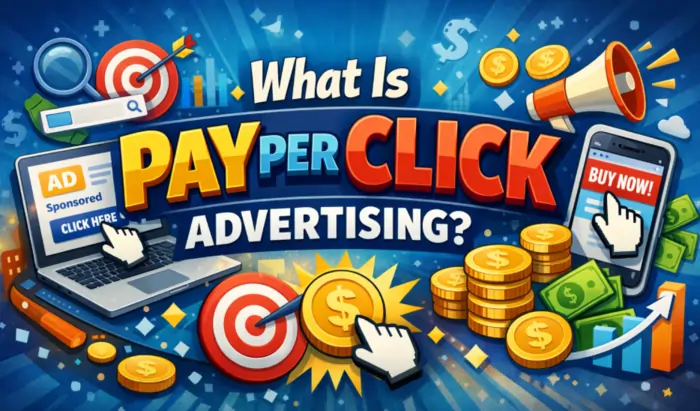
Pay per click (PPC) is a type of online advertising where you pay only when someone clicks your ad. You set a budget, choose who you want to reach, and your ads appear on platforms like Google, YouTube, Facebook, and Instagram.
Common PPC platforms in 2026 include:
- Google Ads: search, shopping, YouTube, Performance Max.
- Official info: https://ads.google.com
- Meta Ads: Facebook and Instagram campaigns for leads, traffic, and sales.
- Business help center: https://www.facebook.com/business/ads
- Other platforms: LinkedIn Ads, TikTok Ads, Amazon Ads, and niche ad networks depending on your business.
Good beginner resources you can skim later:
PPC is popular because:
- You can see results quickly compared to SEO and organic social.
- You can control your daily spend and pause anytime.
- You get clear data on impressions, clicks, and conversions, which makes it easier to measure ROI.
For small businesses, PPC is often the fastest way to test offers, landing pages, and new markets—as long as you avoid common beginner mistakes.
What Does a Pay Per Click Advertiser Actually Do?
When people say “pay per click advertisers,” they might mean:
- A freelance PPC specialist
- A PPC agency
- A single in‑house marketer who manages ads
- Or a PPC consultant like me, who advises you and your team
Good PPC advertisers usually:
- Research keywords, audiences, and competitors
- Set up campaigns, ad groups, and ad creatives
- Configure conversion tracking (forms, calls, sales)
- Monitor search terms and add negative keywords
- Adjust bids, budgets, and targeting based on performance
- Report results and propose changes
Guides like these break down typical responsibilities and expectations:
- PPC Management for Small Business: A Practical Guide
- PPC Consulting Services: What They Are & Why They Matter
The problem is, not every PPC provider works at this level. Many “advertisers” only push buttons in Google Ads, without understanding your real business goals or your full funnel.
In my article How to Choose Pay Per Click Advertisers (And When You Just Need a PPC Consultant Instead of an Agency), I explain how to spot the difference between true strategic help and shallow account management.
PPC Advertiser vs PPC Consultant vs Agency
In 2026, you have three main options when you want help with PPC.
1. PPC agencies
- They manage many clients at the same time.
- Often have standard processes and larger teams.
- May require fixed contracts and minimum ad spend.
You can see how agencies pitch their services in lists like:
Agencies are a good fit for larger budgets and companies that need full‑service support, but some small businesses feel like “just another account” and do not get real strategic attention.
2. Freelance PPC advertisers
- Usually manage fewer accounts with flexible contracts.
- Skill level varies a lot—from true experts to beginners learning on your budget.
- They often focus on campaign setup and execution.
To see how consultants and freelancers position themselves, check:
3. PPC consultants (my model)
- Focus on strategy, audits, and guidance, not just pushing buttons.
- Work directly with founders, marketing leads, or in‑house teams.
- Often used to check or improve what agencies or freelancers are already doing.
See how others describe this model:
- PPC Consulting Services: Drive More Conversions
- PPC Consulting Services – Grow Ad ROI, Fast
- PPC Consulting Services – Panem
- What is PPC Consulting? Expert Insights and Guidance
As a PPC consultant, I:
- Audit your current Google Ads / Meta Ads accounts
- Map your goals, funnel, and budget
- Design a clear PPC strategy (structure, targeting, tracking, landing page feedback)
- Coach your team or current agency so they implement the plan correctly
You hire me, not a big agency brand. You get direct access to my brain and my experience, without paying for a whole team you do not use.
How PPC Fits Into Your 2026 Marketing Mix
To get value from PPC, you need to see it as part of your whole marketing system, not as a magic lead machine.
PPC works best when:
- You know your ideal customer and their problems.
- Your offer is clear and specific (for example, “Google Ads setup for dentists,” not just “marketing”).
- Your landing pages are fast, mobile‑friendly, and match the promise in your ad.
- You track meaningful conversions (qualified leads, booked calls, purchases), not just clicks.
Helpful references:
- Small Business Marketing In 2026: The Ultimate Guide
- PPC For Small Business: 11 Expert Tips To Drive More Revenue
On the SEO side, I often tune client sites using Rank Math SEO: The Ultimate Guide to Optimizing Your WordPress Site so your landing pages are fast, structured, and ready for both search and AI.
Simple PPC Strategy for Business Owners (High Level)
You do not need to become a full PPC expert to work with pay per click advertisers or a consultant effectively.
Good PPC strategy guides cover similar basics:
- Effective PPC Strategies for Small Businesses in 2026
- PPC Budget Guide 2026: Calculate & Optimize Your Spend
At a high level, a sound PPC strategy answers:
- Who do we want?
- Which locations, demographics, and intents?
- For local businesses, geo‑targeting is critical so you do not pay for clicks outside your service area.
- What are we offering?
- One main offer per campaign: free audit, quote request, product demo, booking.
- Every ad and landing page should match this offer exactly.
- How much can we afford to pay per lead or sale?
- Define your acceptable CPA (cost per acquisition) or ROAS (return on ad spend).
- What will we track as success?
- Conversions in Google Ads, GA4 events, call tracking, form submissions, online sales.
In PPC Strategy 2026: How I Plan Google Ads and Meta Ads Campaigns for Small Businesses I break this out into a simple framework you can follow or hand off to your team.
Common Reasons PPC Campaigns Fail
If you have run PPC before and felt burned, you are not alone. Most “PPC horror stories” come from a handful of repeat problems.
Good breakdowns include:
- Why Most PPC Campaigns Stall and How White Label PPC Teams Fix Them
- PPC For Small Business: 11 Expert Tips To Drive More Revenue
- The real reason your Amazon PPC feels expensive in 2026
Top reasons pay per click campaigns fail:
- No clear goal: “Get more traffic” or “get more sales” is not specific enough. You need a clear CPA target or lead quality benchmark.
- Weak tracking: No conversion tracking or wrong conversions (for example tracking every page view instead of real leads).
- Broad, unfiltered keywords: Running broad match on “lawyer,” “dentist,” or “marketing” without enough negatives sends money to the wrong people.
- Bad landing pages: Slow sites, confusing forms, or weak copy waste good clicks.
- Set‑and‑forget approach: Campaigns run on auto for months without search term reviews or bid adjustments.
- Wrong expectations: Expecting PPC to fix a weak offer or an unproven business model.
In Why Your Pay Per Click Advertising Is Not Working (And How a PPC Consultant Can Fix It), I go deeper into each problem and show how I approach fixes during audits.
AEO, GEO, and Semantic PPC Content (In Simple Terms)
You might see terms like AEO, GEO, and semantic content in SEO and AI discussions.
Useful overviews:
- The State of AEO & GEO in 2026: Forecast, Investments, & Strategies
- How SEO, AEO & GEO Shape Content Visibility in 2026
- 4 Layers of SEO 2026 – SXO, AIO, AEO & GEO
In short:
- AEO (Answer Engine Optimization): Making your content easy for AI systems to quote as a direct answer in tools like Google AI Overviews, ChatGPT, and Perplexity.
- GEO (Generative Engine Optimization): Making your brand and ideas part of what generative AI “knows” and uses when it builds answers and summaries, even beyond single citations.
- Semantic: Making your content clear and structured around topics, entities, and natural language questions instead of just single keywords.
For PPC content like this guide, that means:
- Answering questions business owners really ask.
- Using headings and FAQs that match those questions closely.
- Linking related articles so AI and search engines see a topic cluster around pay per click advertisers and PPC strategy.
- Adding real‑world experience and examples so your content cannot be faked by generic AI.
How I Work With Clients as a PPC Consultant (Not an Agency)
I work directly with founders and marketing leads who want clarity and control over their PPC spend.
Typical ways we work together:
- PPC audit: I review your Google Ads / Meta Ads accounts, tracking, keyword mix, landing pages, and current results, then give you a simple report and Loom walkthrough.
- Strategy package: I design a PPC strategy that fits your goals and budget, including recommended structure, targeting, messaging, and conversion tracking setup.
- Ongoing advisory: Monthly or quarterly calls to review data, check what your team or agency is doing, and suggest experiments and improvements.
I do not:
- Lock you into long contracts.
- Take a percentage of your ad spend.
- Build a big agency team around you.
You get direct access to me and my experience in SEO, PPC, and AEO/GEO‑ready content.
You can reach me here:
- Email:
ceo@jingrey.comorjeaniusseo@gmail.com - Website: https://jingrey.com
- LinkedIn: https://www.linkedin.com/in/jeandiazpalabrica/
Frequently Asked Questions About Pay Per Click Advertisers
Is PPC too expensive for small businesses in 2026?
PPC can be expensive if you target broad, high‑competition keywords without a clear strategy, but when you focus on the right locations, intents, and offers, small businesses can run profitable campaigns with modest budgets.
Should I hire a PPC agency or a PPC consultant?
If you want someone to fully take over execution and you have a larger budget, a PPC agency can make sense; if you want strategy, honest feedback on your current campaigns, and help training your team, a PPC consultant is often a better fit.
How much should I spend on PPC each month?
There is no universal number, but many guides suggest starting with a test budget that is enough to collect meaningful data (often a few hundred to a few thousand dollars), then adjusting based on your cost per lead and cost per sale.
Can PPC work if my website is slow or old?
PPC can send traffic to almost any page, but slow or confusing landing pages will kill your results; often the first step is to fix basic UX, speed, and messaging before scaling ad spend.
How long until I see results from PPC?
You can see clicks and basic data within days, but it usually takes a few weeks to gather enough information to make smart decisions, and several months to fully dial in campaigns for stable performance.
What is the difference between PPC and SEO in 2026?
SEO builds long‑term organic traffic and authority; PPC gives you faster, more controllable traffic, but you pay for every click; in 2026, the best strategies use both together and also consider AEO and GEO so your content appears in AI‑driven answers.