

Why Authenticity Beats Automation in 2026 Key Takeaways
As generative AI floods the market with polished but hollow copy, creative leaders are rediscovering a hard truth: audiences crave genuine human connection.
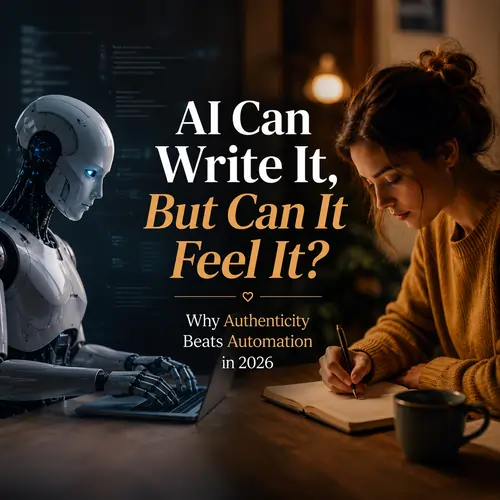
What Does Why Authenticity Beats Automation in 2026 Mean for Creatives?
Imagine this: A brand launches a full campaign written entirely by ChatGPT in under 90 seconds. The copy is grammatically flawless. It hits every keyword. Yet, the comment section is filled with one word: “Meh.” That’s the problem in a nutshell. AI can produce text, but it can’t feel. It doesn’t know what it’s like to lose a client, celebrate a breakthrough, or stay up late perfecting a single sentence. In 2026, Why Authenticity Beats Automation in 2026 is the wake-up call every creative needs to hear. For a related guide, see Why Most SEO Strategies Fail in 2026 (and How to Fix It).
For Creative Directors, Copywriters, and Content Strategists, this means rethinking the entire content workflow. Automation tools are brilliant for research, drafts, and data crunching. But the moment a piece of content needs to connect — to make someone laugh, cry, or take action — the human touch is irreplaceable.
The Limits of Automation: When AI Falls Short in Emotional Branding
Let’s be clear: AI is incredible at scale. It can generate hundreds of product descriptions or social posts in seconds. But AI authenticity vs automation becomes painfully obvious when you compare a heartfelt founder story with an AI-generated “About Us” page. The former makes you feel something. The latter makes you click away.
Why Algorithms Can’t Mimic Real Human Experience
AI models are trained on patterns, not lived experience. They can’t recall the smell of a grandmother’s kitchen or the sting of a rejection that sparked a career pivot. This lack of embodied memory is the core reason emotional branding 2026 demands real human input. When a brand tries to fake empathy, audiences sense it instantly — and they punish it with indifference.
The Trust Deficit in Automated Content
A 2025 survey by Edelman found that 67% of consumers say they trust a brand less if they suspect its content is entirely generated by AI. Human connection in marketing isn’t a nice-to-have; it’s a trust signal. Brands that openly blend AI tools with human oversight — and clearly communicate that blend — actually earn more credibility than those that hide their automation. For a related guide, see Why AI Slop is Killing Your Content — And How Authentic Marketing Wins.
5 Smart Warnings to Keep Your Brand Human When AI Can Write but Can’t Feel
Here are five practical warnings every creative leader should pin to their digital whiteboard. They are rooted in authentic copywriting principles and real-world case studies.
1. Don’t Let Efficiency Kill Your Voice
Your brand voice is your fingerprint. AI tends to produce a generic, neutral tone that sounds like everyone else. If you use AI drafts, always rewrite the opening and closing paragraphs by hand. That’s where emotion lives.
2. Never Use AI for Crisis Communication
When something goes wrong, audiences need a real person to say, “We messed up.” An AI-generated apology feels hollow and damages trust permanently. Always let a human write the hard messages.
3. Treat AI as the First Draft, Not the Final Word
The smartest teams in 2026 use AI as a creative sparring partner — not the author. Feed the AI your tone guidelines, edit ruthlessly, and inject personal anecdotes. This hybrid approach is where Why Authenticity Beats Automation in 2026 becomes actionable.
4. Preserve Imperfection as a Virtue
Weird metaphors, slightly awkward phrasing, and inside jokes are what make copy feel human. AI tends to sand them down. Resist the urge to polish everything into a smooth, soulless paste. Let your quirks show.
5. Build Your Audience First, Your Content Second
Automation produces content. Authenticity builds communities. Spend more time listening to your audience — through comments, surveys, and conversations — than you do generating text. The best copy writes itself when you know exactly who you’re talking to.
Case Studies: Brands That Won by Choosing Humanity Over Automation
Let’s look at two brands that exemplify Why Authenticity Beats Automation in 2026 in practice.
| Brand | Strategy | Result |
|---|---|---|
| Patagonia | Published an AI-written catalog, then a human-written letter explaining why the AI version felt wrong. Turned it into a transparent case study. | 28% increase in newsletter sign-ups and widespread praise for honesty. |
| Gymshark | Uses AI for product descriptions but insists on real athlete stories for campaigns. Featured a founder video discussing mental health — unscripted, raw, and one take. | Campaign drove 4x engagement compared to AI-generated fitness tips. |
Both brands understood that, in 2026, emotional branding is about showing your seams, not hiding them. They didn’t reject technology. They subordinated it to human storytelling.
How Creative Leaders Can Implement Authentic Copywriting in Their Workflow
Switching to an authenticity-first approach doesn’t mean abandoning AI. It means changing how you use it. Here’s a simple workflow that dozens of creative directors have adopted this year.
Step 1: Define Your Emotional Territory
Before writing a single word, write down three emotions you want your audience to feel. Use that as your creative brief, not just a list of features. This is a pure, authentic copywriting strategy.
Step 2: Use AI for Research and Structure
Let AI gather competitor insights, outline sections, and suggest headlines. This saves hours. But when it’s time to write the actual narrative, close the AI tab and open a blank page.
Step 3: Record Yourself Talking First
Before writing, speak your ideas into a voice memo. Transcription of natural speech contains more personality and flow than any AI-generated draft. Then polish that transcript into copy.
Step 4: Add One Specific Human Detail Per Piece
Every article, email, or landing page should include at least one detail that only a human could provide: a personal memory, a client conversation, a lesson from a failure. This single habit is the reason Why Authenticity Beats Automation in 2026 remains true year after year.
Useful Resources
Deepen your understanding of emotional branding 2026 and human connection in marketing with these trusted sources:
- Edelman Trust Barometer 2025 — Annual study on consumer trust dynamics, including attitudes toward AI-generated content.
- Nielsen Norman Group — The Human Voice in Brand Writing — Research-backed guidelines for writing with authenticity in digital experiences.
Conclusion: Why Authenticity Beats Automation in 2026 isn’t just a trend — it’s a fundamental shift in how audiences evaluate brands. Creative leaders who embrace authenticity as their core differentiator will build deeper trust, stronger loyalty, and campaigns that actually move people. The technology is ready. Now the question is: are you?
Frequently Asked Questions About Why Authenticity Beats Automation in 2026
Can AI ever truly replicate human emotion in writing?
Not really. AI can mimic emotional language patterns, but it lacks lived experience, empathy, and genuine intention. Audiences can usually tell the difference, especially when the stakes are high.
What does Why Authenticity Beats Automation in 2026 mean for small businesses?
Small businesses have an advantage because their brand voice can be deeply personal. They should lean into founder stories, behind-the-scenes content, and direct customer conversations rather than generic AI-generated posts.
Is it safe to use AI for SEO content if I humanize it afterward?
Yes. Many successful teams use AI for research and SEO optimization, then rewrite the content with a human voice and emotional depth. The key is never publishing AI output directly without substantial editing.
How do I know if my audience values authenticity over convenience?
Monitor engagement metrics like comments, shares, and time on page. If high-authenticity content outperforms polished but generic content, your audience is telling you they value connection over slickness.
What industries benefit most from authentic copywriting in 2026?
Healthcare, education, financial services, and luxury brands benefit tremendously because trust and emotional connection are core to purchasing decisions in these spaces.
Can automation help scale authentic content without losing quality?
Yes, but only if you treat automation as a support tool — for scheduling, distribution, and basic drafts — while keeping the creative voice firmly in human hands. The hybrid model is the most scalable approach.
What’s the biggest mistake brands make with AI content in 2026?
Publishing AI-generated content without any human revision or emotional check. This results in safe, forgettable content that blends into the background noise and fails to build any meaningful connection.
How does human connection in marketing affect conversion rates?
Authentically written landing pages and emails consistently see higher conversion rates because they build trust before asking for the sale. People buy from brands they feel they know.
Are there tools that help measure the authenticity of content?
Some AI detection tools can flag robotic language, but the best measure is human testing — read your content out loud to a colleague and ask them if it sounds like a person or a bot.
Can a brand recover after being caught using purely automated content?
Yes, but it requires transparency and a clear shift to human-first storytelling. Brands that admit their mistake and show their new process often earn back trust faster than those that stay silent.
What role does vulnerability play in emotional branding 2026?
Enormous. Brands that share challenges, mistakes, and behind-the-scenes realities create deeper emotional bonds than those that present a perfect, polished front. Vulnerability signals honesty.
How often should I use personal stories in business content?
As often as they are genuinely relevant. For every five blog posts, aim for at least one that begins with a personal anecdote. It humanizes the entire content library.
Does Why Authenticity Beats Automation in 2026 apply to B2B marketing?
Absolutely. B2B buyers are humans first, professionals second. They respond to authenticity in case studies, emails, and thought leadership just as much as B2C consumers do.
Can user-generated content replace brand-authored authenticity?
It’s a powerful complement, not a replacement. UGC adds social proof and raw authenticity, but your own brand voice still needs to carry the core narrative and values.
What’s the one metric that signals authentic content is working?
Comment quality and sentiment. If readers are writing thoughtful replies, sharing personal stories, or tagging friends, you’re connecting. That’s a stronger signal than page views alone.
How do I train my team to write authentically at scale?
Start with voice workshops where team members share personal stories related to the brand. Then create a short style guide that emphasizes emotional language, specificity, and first-person perspectives over marketese.
Is it okay to use humor in automated content?
Humor is one of the hardest things for AI to get right because timing and cultural context are everything. It’s safer to let humans handle anything funny or satirical.
What’s the best way to test AI vs. human-written content with my audience?
Run an A/B test on a landing page or email split. Keep everything identical except the tone and personalization. Measure not just conversions but also qualitative feedback from user comments and surveys.
Will AI ever get better at authenticity?
AI will improve at simulating emotional patterns, but true authenticity requires consciousness, intention, and shared human experience. Those are not achievable through pattern recognition alone.
What’s the first step a creative director should take today to implement Why Authenticity Beats Automation in 2026?
Conduct a “human audit” of your last 10 pieces of content. Count how many contain a personal story, a specific human detail, or a moment of vulnerability. If the number is below three, it’s time to rethink your process.