

Are ChatGPT Ads the Future of Digital Marketing Key Takeaways
The rise of AI-powered marketing is reshaping how brands connect with audiences, and ChatGPT advertising sits at the center of this shift.
Why the Question Are ChatGPT Ads the Future of Digital Marketing Matters Now
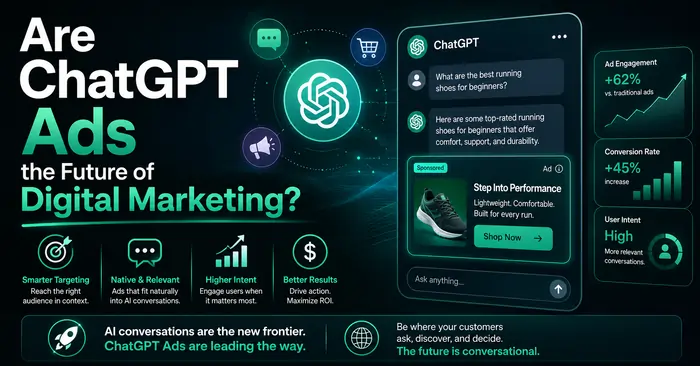
Every few years, a new channel emerges that forces digital marketers to rethink their playbook. Social media did it. Mobile did it. Now conversational AI marketing is knocking on the door. When ChatGPT crossed 100 million users faster than any previous consumer application, it signaled something bigger than a chatbot novelty — it signaled a new way people want to interact with information and, inevitably, with brands.
OpenAI has started experimenting with ChatGPT sponsored ads and ChatGPT sponsored content, weaving paid recommendations into natural conversation flows. For a digital marketing veteran like me, this feels like watching the early days of Google AdWords or Facebook Ads. The platform is nascent, but the user behavior shift is undeniable. People are asking ChatGPT for product advice, travel recommendations, and purchase decisions. The question is no longer if advertising will enter these conversations, but how it will be done without breaking trust. For a related guide, see 7 Features of AI Max Expansions Revealed at Google Marketing Live.
How ChatGPT Advertising Actually Works Today
As of early 2026, ChatGPT ads remain limited in scale but clear in direction. OpenAI has rolled out ChatGPT sponsored recommendations in select verticals like travel, retail, and B2B software. When a user asks for “best project management tools for remote teams,” the AI may surface a sponsored result from a partner brand, labeled transparently.
The Mechanics Behind AI-Powered Marketing Inside ChatGPT
Unlike traditional search ads that match keywords to a static SERP, ChatGPT advertising relies on natural language understanding and session context. Here is how a typical interaction flows:
- User query: “Recommend a good CRM for a startup with 10 employees.”
- AI processing: ChatGPT interprets intent (budget-conscious, small team, easy setup).
- Sponsored recommendation: A partner brand’s CRM appears as a suggested option, marked with “Sponsored.”
- User engagement: The user can ask follow-up questions directly within the same thread, creating a two-way conversational ad experience.
This conversational advertising model is fundamentally different from clicking a banner. It feels more like a trusted advisor making a suggestion, which can boost recall and conversion intent.
Comparing ChatGPT Ads to Traditional Search and Social Advertising
To understand the future of digital marketing, we need to stack ChatGPT against established channels. Below is a comparison based on my observations running campaigns across Google, Meta, and early ChatGPT pilot programs.
| Dimension | Google Ads (Search) | Meta Ads (Social) | ChatGPT Ads (Conversational) |
|---|---|---|---|
| User intent | High (active search) | Low to medium (passive browsing) | High (contextual question) |
| Ad format | Text links with extensions | Images, video, carousel | Natural language recommendation |
| Personalization | Keyword + location | Demographics + behavior | Conversation history + session context |
| User trust | Moderate (ad labels visible) | Low (ad fatigue frequent) | Potential high (if handled transparently) |
| Engagement depth | Single click | Like/share/click | Multi-turn dialogue |
AI-driven advertising in ChatGPT has the advantage of appearing within a trusted conversation. However, it also carries the risk of user backlash if ChatGPT sponsored ads feel intrusive or manipulative. The balance between usefulness and commercialization will define the success of ChatGPT business advertising.
5 Predictions for the Future of Digital Marketing with ChatGPT
After 18 years watching digital advertising evolve, I have learned to spot patterns before they become obvious. Here are five predictions for ChatGPT ads 2026 and beyond.
Prediction 1: Conversational Commerce Will Replace Basic Product Listings
By the end of 2026, expect ChatGPT product recommendations to include direct purchase links, price comparisons, and inventory checks — all inside the chat. AI-powered customer engagement will shorten the path from “I want this” to “I bought this.” For a related guide, see 8 New Google Commerce AI Tools from Google Marketing Live 2026.
Prediction 2: ChatGPT Advertising Platform Will Offer Self-Serve Tools
Currently, ChatGPT advertising opportunities for businesses are limited to managed partnerships. I predict OpenAI will open a self-serve AI advertising platform similar to Google Ads Manager by Q4 2026, allowing small and medium businesses to create ChatGPT sponsored links with targeting based on conversation topics, user demographics, and sentiment.
Prediction 3: AI Search Monetization Will Rival Google’s Dominance
As AI search advertising matures, the line between organic answers and paid recommendations will blur — but in a good way. OpenAI advertising model will prioritize relevance over bid price, forcing advertisers to create genuinely useful ChatGPT sponsored content rather than keyword-stuffed ads.
Prediction 4: Brands Will Hire Conversational Search Optimization Specialists
Just as SEO and SEM became career paths, a new role will emerge: conversational search optimization expert. These professionals will optimize brand content so it appears as the recommended ChatGPT sponsored recommendation for relevant queries. The skill set will overlap with SEO, copywriting, and data analysis.
Prediction 5: User Trust Will Be the Currency of AI Advertising
If ChatGPT ads become too aggressive, users will abandon the platform. OpenAI knows this. The ChatGPT monetization strategy will likely cap ad density per session and offer a premium ad-free tier. Brands that invest in ChatGPT marketing opportunities must prioritize value over volume.
Benefits and Challenges of Advertising Inside AI Conversations
Every new channel comes with trade-offs. Let me break down what excites me and what keeps me cautious about AI marketing trends 2026.
Top Benefits for Advertisers
- Higher relevance: ChatGPT ad targeting uses real-time conversation context, not just past behavior.
- Better engagement: Users can ask questions about a product within the ad, mimicking a sales assistant interaction.
- Innovation credibility: Being an early adopter of AI-powered marketing signals forward-thinking branding.
Key Challenges to Watch
- Scalability: ChatGPT advertising platform is still invite-only. Mass adoption will take time.
- Measurement: Standard metrics like CTR and CPA may not capture the value of multi-turn conversations.
- Transparency risk: Users may not always recognize ChatGPT sponsored content as advertising, raising ethical concerns.
- Cost: Early ChatGPT ad ecosystem costs are high, limiting access to big budgets.
Actionable Steps: How to Prepare Your Brand for AI-Powered Marketing
Whether you are an SEO consultant or a CMO, waiting until ChatGPT ads reach full maturity is a mistake. Here is what you can do today.
Step 1: Audit Your Brand’s Conversational Content
ChatGPT sponsored recommendations are drawn from the same content corpus the AI uses to answer questions. If your brand answers common customer queries on your website or blog, that content becomes the raw material for future ChatGPT sponsored ads. Make sure your FAQs, product descriptions, and comparison guides are accurate and helpful.
Step 2: Experiment with ChatGPT Business Advertising Pilots
If OpenAI opens applications for ChatGPT advertising pilots in your industry, apply immediately. Early data will give you insights into AI-driven consumer behavior that your competitors will not have for another year.
Step 3: Rethink Your KPIs for Conversational Advertising
Stop looking only at click-through rates. In AI-powered search engines, success metrics include conversation depth, user satisfaction scores, and follow-up queries. Start tracking how many questions your content can answer in a single session — that is the new AI customer journey optimization metric.
Useful Resources
To deepen your understanding of AI advertising trends 2026 and the future of conversational AI, visit OpenAI’s official ChatGPT announcement page for platform updates and MarketingWeek’s analysis of AI advertising trends for expert perspectives on AI commerce trends.
Frequently Asked Questions About Are ChatGPT Ads the Future of Digital Marketing
What are ChatGPT ads exactly?
ChatGPT ads are paid recommendations or sponsored content that appear within conversational responses generated by ChatGPT. They are designed to feel natural and helpful, matching the user’s query intent.
How do ChatGPT ads work?
When a user asks a question, the AI may include a ChatGPT sponsored recommendation alongside the organic answer. These ads are flagged as sponsored and are selected based on the conversation context, not just keywords.
Are ChatGPT ads the future of advertising?
While traditional ads will not disappear, AI-powered marketing through platforms like ChatGPT will become a significant channel. The shift toward conversational advertising aligns with how users now expect personalized, interactive experiences.
Can ChatGPT replace Google Ads?
ChatGPT search ads are not a direct replacement for Google Ads, but they may capture a portion of search ad spend — especially for queries that benefit from natural language explanations rather than link lists.
Will AI change digital marketing dramatically?
Yes. The future of digital marketing will revolve around AI-driven advertising, personalization at scale, and conversational journeys. Marketers who do not adapt risk being left behind as AI marketing trends 2026 accelerate.
Are AI ads more effective than traditional ads?
Early data suggests AI-powered marketing can achieve higher engagement rates because the ad matches the user’s immediate conversational intent. However, effectiveness depends on transparency and ad quality.
What is conversational advertising ?
Conversational advertising is a format where the ad is delivered as part of a two-way dialogue. The user can ask questions, get clarifications, and interact with the brand message without leaving the chat.
How can businesses advertise in ChatGPT?
Currently, ChatGPT advertising opportunities for businesses are limited to managed partnerships with OpenAI. Self-serve tools are expected to roll out by late 2026 through the ChatGPT advertising platform.
Do ChatGPT ads influence customer decisions?
Yes, especially when the ChatGPT sponsored content appears relevant and helpful. Because the recommendation is integrated into a trusted conversation, it can sway purchase intent more naturally than a banner ad.
Are ChatGPT ads personalized?
Yes. ChatGPT ad targeting uses the current conversation context and user history (when allowed) to serve relevant sponsored recommendations, making them more personalized than most search or social ads.
What are the benefits of advertising in AI conversations?
Benefits include higher relevance, multi-turn engagement, reduced ad fatigue, and the ability to answer user questions within the ad itself — a key advantage of AI-powered customer engagement.
How do ChatGPT ads compare to search engine ads?
Search engine ads appear above or beside organic results. ChatGPT search ads are woven into a natural language response, which can feel less like an interruption and more like a suggestion.
Can ChatGPT become a major advertising platform?
With its massive user base and contextual intelligence, ChatGPT has the potential to become a major AI marketing platform. Its success will depend on the ChatGPT monetization strategy and user acceptance.
What industries benefit most from ChatGPT ads?
Travel, e-commerce, SaaS, financial services, and education are early adopters. Any industry where users ask for recommendations or comparisons stands to gain from AI recommendation marketing.
Are ChatGPT ads available worldwide?
Currently, ChatGPT advertising is limited to select regions and partners. Global expansion is expected as the ChatGPT ad ecosystem scales.
How will AI assistants change consumer behavior?
Consumers will increasingly rely on AI-assisted shopping experiences for product discovery, comparisons, and purchase decisions. Conversational AI marketing will shape how brands appear in these journeys.
Can small businesses advertise in ChatGPT?
Not yet at scale, but once the OpenAI advertising model opens to self-serve, small businesses will gain access to ChatGPT business visibility through affordable sponsored placements.
What is the ROI of AI advertising?
Early data varies, but AI-powered lead generation through ChatGPT shows lower cost per qualified lead compared to social ads for some verticals. ROI improves as the ChatGPT ad targeting becomes more refined.
How will marketers adapt to AI-driven search?
They will need to learn conversational search optimization, create content that answers direct questions, and track new metrics beyond traditional clicks. AI search marketing strategies will become part of every digital plan.
Are conversational ads more engaging than banner ads?
Yes. Conversational advertising invites interaction and feels less intrusive. When done right, users spend more time with a conversational ad than a static banner because they can explore and ask follow-ups.