


AI-powered search optimization Key Takeaways
AI-powered search optimization transforms how content ranks by understanding user intent, context, and natural language.
- AI-powered search optimization prioritizes semantic relevance and user intent over exact-match keywords.
- Common pitfalls include ignoring natural language patterns, neglecting structured data, and misinterpreting AI-driven algorithms.
- Adopting a user-first content strategy aligned with machine learning models improves visibility and engagement.
What Readers Should Know About AI-powered search optimization
AI-powered search optimization refers to the use of artificial intelligence technologies—such as machine learning, natural language processing (NLP), and semantic analysis—to improve a website’s visibility in search engine results. Unlike traditional SEO, which often focuses on keyword density and link building, AI SEO analyzes user behavior, search intent, and content quality to deliver more accurate rankings.
Search engines like Google now rely on AI models such as BERT and MUM to understand the context behind queries. This shift means that content must satisfy the searcher’s deeper need, not just match a string of words. For marketers and content creators, this evolution requires a fundamental change in strategy. For a related guide, see Schema Markup for AI Overview: Does It Help?.
One of the biggest misconceptions is that AI-powered search optimization is purely technical. In reality, it combines data-driven insights with human creativity to create content that resonates with both algorithms and readers.
How AI-powered search optimization Differs from Traditional SEO
Traditional SEO tactics like exact-match keywords, meta keyword stuffing, and aggressive link building have lost their effectiveness. AI-powered search optimization focuses on understanding the relationship between words and concepts. For example, a query like “best way to fix a leaky faucet” triggers AI models to look for step-by-step tutorials, tool recommendations, and safety tips—not just pages that repeat the phrase.
Another key difference is automation. AI tools can analyze thousands of search queries, identify patterns, and suggest content gaps. They also help optimize for voice search, where questions are longer and more conversational. Traditional SEO often required manual guesswork; AI SEO provides actionable insights based on real user behavior.
Natural Language Processing (NLP) and Semantic Search
NLP enables search engines to interpret commas, synonyms, and sentence structure. Semantic search goes further by mapping out relationships between entities. For instance, a page about “apple” could refer to the fruit or the tech company. AI models determine context through surrounding words, links, and user history. Content that covers a topic comprehensively—using related terms and answering follow-up questions—performs better in this environment.
Intent Matching Over Keyword Matching
Search intent falls into four categories: informational, navigational, transactional, and commercial investigation. AI-powered search optimization requires aligning content with the specific intent behind the query. A user searching for “buy running shoes online” expects product pages and pricing, not a blog post about running technique. Marketers must analyze SERP features (like featured snippets, People Also Ask boxes) to tailor content accordingly.
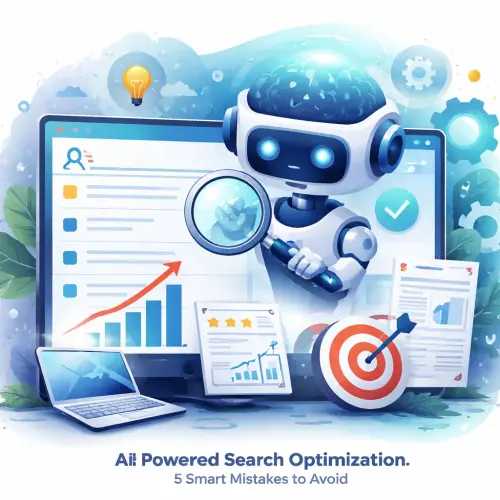
5 Smart Mistakes to Avoid in AI-powered search optimization
Even experienced SEO professionals can stumble when adapting to AI-driven algorithms. Here are five common errors and how to sidestep them.
Mistake 1: Ignoring Natural Language and Conversational Queries
Voice search and digital assistants have popularized long-tail, question-based searches. Writing content that sounds overly formal or stuffed with keywords hurts readability and rankings. Instead, adopt a conversational tone. Answer questions directly in your headings and paragraphs. Use tools like Google’s Natural Language API or AnswerThePublic to discover how people phrase their queries. For a related guide, see 10 Smart Ways to Optimize Content for AI Search Engines.
Mistake 2: Neglecting Structured Data and Schema Markup
Structured data helps AI understand your content’s context and format. Without schema markup, your pages miss opportunities for rich results like star ratings, FAQ snippets, and event listings. Implement Schema.org types relevant to your content—Article, FAQPage, HowTo, Product, etc. Test your markup using Google’s Rich Results Test tool.
Mistake 3: Overlooking Content Depth and Entity Coverage
AI models reward comprehensive coverage of a topic. A thin page that only scratches the surface will struggle to rank. For example, a post about “vegan meal prep” should include nutritional info, sample menus, storage tips, and ingredient substitutions. Use tools like SEMrush or Ahrefs to analyze content gaps and identify related entities your audience cares about.
Mistake 4: Relying Solely on AI Tools Without Human Oversight
AI writing assistants and optimization platforms are powerful, but they can produce generic or misleading content. Always review output for accuracy, tone, and uniqueness. Combine tool recommendations with your expertise and audience knowledge. For instance, an AI tool might suggest a keyword phrase that has low search volume but high competition—human judgment helps prioritize high-impact opportunities.
Mistake 5: Failing to Monitor Algorithm Updates and AI Model Changes
Google’s AI algorithms update regularly, and models like BERT or MUM evolve. A strategy that works today may need adjustment tomorrow. Subscribe to Google’s Search Central Blog and reputable SEO publications like Search Engine Land. Track your site’s performance using Google Search Console and adjust content based on user behavior signals like click-through rate and dwell time.
Techniques That Drive AI-powered search optimization Success
Adopting the right techniques ensures you stay ahead of the curve. Here are three actionable strategies.
Build Topic Clusters Instead of Isolated Pages
A topic cluster structure involves a comprehensive pillar page covering a core subject, with multiple cluster pages linking back. For example, a pillar page on “content marketing” could have cluster pages about “SEO writing,” “social media promotion,” and “email nurturing.” This signals expertise and relevance to AI models.
Optimize for User Experience Signals
AI algorithms factor in page speed, mobile-friendliness, and intuitive navigation. A slow or confusing site penalizes your rankings. Use Google PageSpeed Insights and Core Web Vitals reports to identify improvements. Also, write compelling meta descriptions and title tags—these influence click-through rates, a key user engagement signal.
Leverage AI-Powered Content and Optimization Tools
Tools like Surfer SEO, Frase, and MarketMuse analyze top-ranking content and suggest improvements in real time. They help with keyword clustering, content length, and semantic relevance. However, always customize the recommendations to your brand voice and audience.
Useful Resources
Deepen your understanding of AI-powered search optimization with these resources:
- Read Google’s SEO Starter Guide for foundational best practices that complement AI strategies.
- Explore Moz’s AI SEO category for expert insights, case studies, and trend analyses.
Frequently Asked Questions About AI-powered search optimization
What is AI-powered search optimization in simple terms?
It is the practice of using artificial intelligence to understand user intent and context, helping content rank higher by being more relevant and conversational.
How is AI-powered search optimization different from traditional SEO?
Traditional SEO focused on keywords and backlinks; AI SEO emphasizes semantic relevance, user intent, and content quality, adapting to machine learning models.
Do I need special tools to implement AI-powered search optimization ?
While not strictly required, tools like Surfer SEO, Frase, and MarketMuse can help analyze content gaps, suggest topics, and optimize for AI search algorithms.
Can small businesses benefit from AI-powered search optimization ?
Yes. Small businesses can improve local search visibility by creating detailed, intent-focused content that answers customer questions naturally.
What role does natural language processing play in AI SEO ?
NLP allows search engines to understand sentence structure, synonyms, and context, making conversational and long-tail content more discoverable.
How important is voice search for AI-powered search optimization ?
Voice search relies heavily on natural language and question-based queries, making it a key area where AI SEO strategies improve visibility.
Should I stop using keywords altogether?
No. Keywords still matter, but they should be used within a naturally written, context-rich article that addresses user intent.
What are entity signals in AI SEO ?
Entity signals refer to named concepts, people, places, or things that search engines recognize. Covering related entities strengthens your topic authority.
How do I optimize for featured snippets using AI SEO ?
Answer common questions directly in clear paragraph format, use bullet lists or tables, and add the question as an H2 or H3 heading.
Will AI make SEO obsolete?
No. AI changes how SEO is performed but does not replace the need for quality content, strategic planning, and human creativity.
What is semantic search?
Semantic search is the ability of search engines to consider the context and intent behind a query, rather than just matching keywords.
How does BERT affect SEO?
Google’s BERT model helps understand natural language prepositions and context, rewarding content that accurately answers user questions.
What is MUM and why does it matter?
MUM (Multitask Unified Model) is Google’s advanced AI that can understand and generate language across multiple tasks, including video and image analysis, making comprehensive content more valuable.
Can I use AI to write my entire SEO content?
AI can assist with drafting, but human oversight is essential to ensure accuracy, tone, and uniqueness that resonates with your audience.
Does site speed matter more with AI SEO ?
Yes. User experience signals like page speed and mobile usability are key factors in AI-driven ranking algorithms.
How long does it take to see results from AI-powered search optimization ?
Results vary, but many see improvements within 3-6 months as AI algorithms re-crawl and re-index optimized content.
What is a topic cluster?
A topic cluster is a content strategy where a central pillar page links to multiple related cluster pages, building topical authority.
Do I need structured data for AI SEO ?
Yes. Structured markup helps AI understand your content’s format and context, enabling rich results and improved visibility.
Can AI SEO help with local search?
Absolutely. Local businesses can optimize for “near me” queries by using conversational language, local entities, and Google Business Profile integration.
What is the most common mistake in AI-powered search optimization ?
Ignoring natural language and conversational queries is the most frequent mistake, as old keyword-stuffing habits do not align with AI algorithms.