





difference between SEO and GEO Key Takeaways
For example, a blog about “how to bake sourdough bread” competes for traffic from anywhere in the world.
- The difference between SEO and GEO is primarily about targeting scope — SEO aims for high visibility across all regions, while GEO targets a defined geographic area.
- SEO uses keywords, backlinks, and technical signals to rank across search engines; GEO relies on local citations, Google Business Profile signals, and region-specific content.
- Both strategies can work together, but what is SEO and what is GEO in marketing each require distinct tactics and performance metrics.
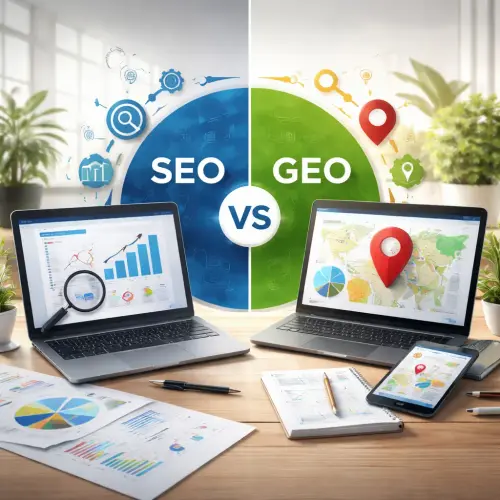
Understanding the Core Difference Between SEO and GEO
To decide which approach fits your business, you first need clear definitions. Many marketers confuse them because both involve search engine rankings. However, their goals and methods are fundamentally different.
What Is SEO (Search Engine Optimization)?
What is SEO in simple terms? It’s the practice of improving your website’s visibility in organic search results across a broad, often global audience. SEO strategies include keyword research, content creation, technical site audits, and link building. The aim is to attract visitors no matter where they are located.
For example, a blog about “how to bake sourdough bread” competes for traffic from anywhere in the world. The SEO vs GEO debate clarifies that SEO prioritizes volume — more eyes on your content.
What Is GEO in Marketing?
What is GEO in marketing specifically refers to Geographic Optimization, sometimes called local SEO. It involves tailoring your online presence to rank for searches that include a location, such as “best coffee shop in downtown Denver.” GEO leverages Google Business Profile optimization, local backlinks, and geo-specific keywords to appear in the local pack or map results.
A dentist in Chicago, for instance, cares about GEO when someone searches “emergency dentist near me.” The search engine optimization difference geographic targeting makes GEO essential for brick-and-mortar businesses, service areas, and multi-location brands.
5 Key Difference Between SEO and GEO You Need to Know for Business Success
Here are the five critical distinctions that separate these two strategies. Understanding each one will help you allocate resources effectively.
1. Targeting Scope: Global vs. Local
SEO casts a wide net. It uses non-geographic keywords (e.g., “digital marketing tips”) to attract users from any location. GEO narrows the net to a specific city, region, or radius. The SEO vs GEO contrast is most visible here — SEO is broad; GEO is precise.
2. Ranking Signals and Factors
SEO ranking factors include domain authority, content quality, mobile-friendliness, and backlink profile. GEO ranking factors add local citations (consistent NAP across directories), Google Business Profile completeness, online reviews, and proximity to the searcher. The difference between SEO and GEO in signals means GEO requires more local reputation management.
3. Keyword Strategy Differences
SEO targets high-volume generic and long-tail keywords. GEO targets “near me” queries, “city + service” searches, and questions that imply a location. For example, “how to repair a leaky faucet” is an SEO keyword; “plumber in Miami emergency service” is a GEO keyword. This search engine optimization difference geographic targeting changes how you plan content. For a related guide, see 5 Generative Engine Optimization Mistakes That Ruin Your Rankings.
4. Content Approach
SEO content is often evergreen, educational, and shareable across audiences. GEO content includes local landing pages, city-specific guides, customer success stories from the area, and event pages. A single blog on “10 ways to save on energy bills” works for SEO. A GEO version would be “10 ways to save on energy bills in Phoenix during summer.”
5. Performance Metrics and KPIs
SEO success measures organic traffic, bounce rate, conversions per site visit. GEO success measures local pack impressions, click-through rate from map results, direction requests, and phone calls. The difference between SEO and GEO in measurement means you need different dashboards and analytics tools.
When to Prioritize SEO vs GEO
Not every business needs both equally. Use this practical checklist to decide which deserves your budget first.
| Business Type | Priority Strategy | Why |
|---|---|---|
| E-commerce store (ships nationwide) | SEO | Needs broad visibility to drive sales from any location. |
| Local restaurant or cafe | GEO | Customers come from nearby — local map ranking is critical. |
| Consultancy with remote clients | SEO | Global reach matters more than physical proximity. |
| Plumbing or HVAC company | GEO | Service area is limited — local searches drive leads. |
| Multi-location franchise | Both | Brand visibility plus local pages for each branch. |
If you are still unsure, audit your current traffic. If most visitors come from non-local queries, invest in SEO. If you receive a high share of “near me” impressions but low conversion, strengthen your GEO.
How to Combine SEO and GEO for Maximum Impact
Smart marketers blend both strategies. Here is a three-step process to integrate SEO vs GEO effectively.
Step 1: Build a Strong SEO Foundation
Start with technical SEO — fast loading times, mobile responsiveness, secure HTTPS, and clean site architecture. Create high-quality content that establishes topical authority. A solid base makes your GEO efforts more effective.
Step 2: Layer Geographic Signals
Add local schema markup (LocalBusiness, GeoCoordinates), create city-specific landing pages, and claim your Google Business Profile. Embed a Google Map on your contact page. Encourage customers to leave reviews mentioning your location.
Step 3: Monitor and Adjust
Use Google Search Console and Google Analytics to segment traffic by location. Track which keywords drive local visibility and which drive global traffic. Adjust your content calendar accordingly. Remember, the difference between SEO and GEO is not a wall — it is a spectrum. For a related guide, see AI Overview vs Featured Snippets: What’s the Difference?.
Real-World Example: SEO vs GEO in Action
Consider a carpet cleaning company called “CleanStep.” If CleanStep runs a blog article titled “How to Remove Red Wine Stains from Carpet,” that is an SEO play. It will attract visitors from many cities. But only people in Denver will convert if CleanStep only serves Denver. So they also create a page “Best Carpet Cleaning in Denver — CleanStep Reviews” optimized for GEO. That page targets local intent, shows up in the map pack, and drives phone calls. This example shows the search engine optimization difference geographic targeting in practice — both strategies work, but for different outcomes.
Common Mistakes When Confusing SEO vs GEO
Avoid these pitfalls that can waste months of effort.
- Using generic keywords on local pages. A landing page for “Chicago Plumbing” should not just repeat generic plumbing tips. It must include local landmarks, neighborhood names, and area-specific problems (e.g., frozen pipes in Chicago winters).
- Ignoring mobile user experience for GEO. Most local searches happen on mobile. A slow or unresponsive site kills conversion.
- Overlooking the difference between SEO and GEO when setting up analytics. If you only track total organic traffic, you might miss that your local pages are underperforming while your global blog is thriving.
- Buying generic links for GEO. Backlinks from local community sites, chambers of commerce, or regional news outlets help GEO far more than generic directory submissions.
Useful Resources
For a deeper dive into SEO fundamentals, read the Google SEO Starter Guide. It covers technical essentials that apply to any search strategy.
To master local geographic targeting, review Google’s official guide to improving your local ranking. This resource explains exactly how Google evaluates location relevance.
Frequently Asked Questions About difference between SEO and GEO
What is the main difference between SEO and GEO?
The main difference between SEO and GEO is that SEO targets broad, global search visibility while GEO focuses on ranking within a specific geographic area, such as a city or region.
Is GEO the same as local SEO?
Yes, GEO (Geographic Optimization) is often used interchangeably with local SEO. Both involve optimizing for location-based search queries and Google Business Profile signals.
Can you do SEO without GEO?
Absolutely. If your business sells digital products or reaches a national/global audience, traditional SEO without GEO is perfectly effective. GEO becomes necessary only when physical location matters.
Which is more important, SEO or GEO?
Neither is universally more important. It depends on your business model. The SEO vs GEO decision should be based on whether you need to attract local foot traffic or remote visitors.
How do I measure GEO success?
Key GEO metrics include local pack impressions, map views, direction requests, phone call clicks, and reviews volume. Use Google Business Profile insights and location-filtered Google Analytics reports.
Does GEO affect voice search?
Yes. Voice search queries often contain “near me” or “close by” terms. GEO optimization helps your business appear in voice search results for local queries on mobile and smart speakers.
What tools help with GEO optimization?
Top tools for GEO include BrightLocal, Moz Local, Whitespark, and the free Google Business Profile dashboard. These help manage citations, reviews, and local rankings.
How long does it take to see GEO results?
GEO can show initial improvements in 4-8 weeks, especially if you fix citation errors and optimize your Google Business Profile. Full local authority takes 3-6 months.
Do backlinks still matter for GEO?
Yes, but local backlinks from community sites, local news, and regional business directories have more impact than generic high-authority links when it comes to GEO ranking.
Can GEO improve my store visits?
Definitely. Proper GEO optimization increases foot traffic by making your business more visible in map searches and local pack results, which directly drives in-store visits.
Is GEO relevant for online-only businesses?
Not usually. Online-only businesses serving a global audience gain little from GEO unless they have physical events or warehouses in specific regions.
How does Google determine location for GEO?
Google uses the user’s IP address, device location (GPS), and search history to determine location. It then matches that with optimized local business listings and signals.
What is the difference between SEO and local SEO?
This mirrors the difference between SEO and GEO. Local SEO is a subset of SEO that specifically targets regional search queries, similar to GEO.
Should I use separate keywords for SEO and GEO?
Yes. For SEO, use generic and broad keywords. For GEO, include location modifiers like city names, district names, and “near me” phrases. Overlap is fine but keep targeting separate.
Does GEO work on Bing and Yahoo?
Yes, all major search engines consider geographic signals. Bing Local listings also support GEO. However, Google dominates the local search market, so prioritize it.
How often should I update my Google Business Profile for GEO?
At least monthly. Update hours, photos, services, and posts. Frequent activity signals freshness to Google and can boost your GEO ranking.
Can GEO help with international targeting?
Yes, you can apply GEO principles to country-level targeting. For example, use hreflang tags and country-specific domains to optimize for different national markets.
What are local citations in GEO?
Local citations are online mentions of your business name, address, and phone number (NAP) on directories like Yelp, Yellow Pages, and local chamber sites. Consistency across citations boosts GEO.
Do social media profiles affect GEO?
Indirectly, yes. Social profiles with location tags, check-ins, and local engagement can reinforce your business’s geographic relevance and contribute to local authority signals.
Is it harder to rank for GEO than SEO?
GEO can be easier initially because competition is limited to businesses within that area. However, once you compete in a saturated city, GEO can be just as challenging as general SEO.