





Private Blog Networks PBN Key Takeaways
Private Blog Networks ( PBNs ) are built by acquiring expired or aged domains with strong backlink profiles, then creating websites that funnel link equity to a money site.
- Private Blog Networks depend on PBN backlinks that offer full control over anchor text and dofollow backlinks , yet leave a trail of PBN footprints search engines now detect with precision.
- Even well‑hidden networks invite Google penalties , manual actions , and algorithmic demotion once SpamBrain connects IP footprints , DNS footprints , or duplicate content patterns.
- Sustainable off‑page SEO — digital PR , editorial backlinks , original research , and resource page link building — builds brand authority and topical authority without the risk of PBN penalties .
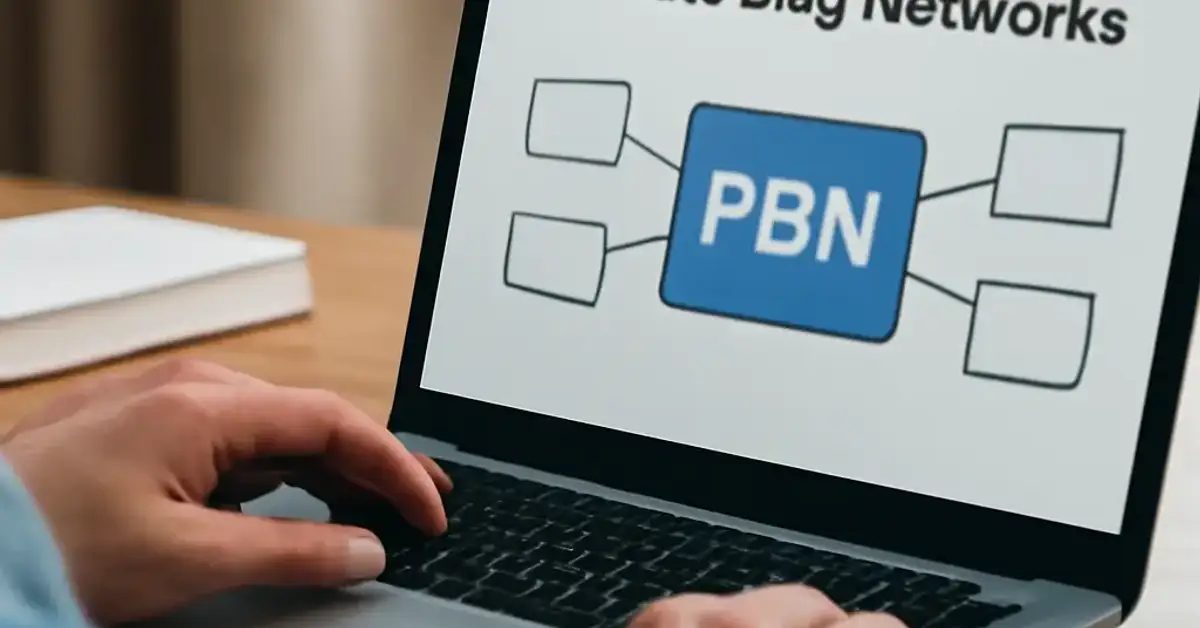
What Is a Private Blog Network (PBN) and How Do They Work?
I’m Jin Grey, and since 2008 I’ve watched Private Blog Networks evolve from a tolerated shortcut into one of the loudest danger signals in modern SEO. At its core, what is a PBN? It’s a PBN network of seemingly independent websites, all owned or controlled by one person, created solely to link to a target site and pass link equity—often called link juice or PageRank. The goal is to manipulate off‑page SEO signals by building artificial links that mimic natural editorial endorsements.
The building blocks are PBN domains: high‑authority expired domains, aged domains, dropped domains, or auction domains that already carry a strong backlink profile. Because these domains have accumulated referring domains and authority backlinks, a PBN link building operator can resurrect them with thin content or duplicate content, then point contextual backlinks at a money page. Each PBN link is typically a dofollow backlinks insertion, often using exact match anchor text or partial match anchor text to deliberately shape the anchor text ratio.
A typical PBN strategy involves PBN hosting designed to scatter the sites across different IPs, registrars, and nameservers, but even that leaves hosting footprints and IP footprints. The entire operation is a form of black hat SEO or at best grey hat SEO (gray hat SEO), and search engines have labeled it a link scheme. For a related guide, see 7 Secrets Behind the ChatGPT SEO Queen You Need to Know.
The Tempting SEO Benefits of Private Blog Networks
Why would anyone touch PBNs when the risks are so well documented? Because the short‑term gains feel almost magical. When you own the PBN websites, you control every aspect of the backlink strategy: you decide the anchor text, you tell each site exactly which page to boost, and you can push only dofollow backlinks from niche relevant backlinks sources. In a landscape where earning a natural link can take weeks, the draw of SEO backlinks that appear overnight is powerful.
A well‑constructed PBN SEO campaign can temporarily inflate domain authority or domain rating, surface more organic keywords, and climb past competitors who follow strict white hat SEO. For affiliate marketing or churn‑and‑burn projects, the immediate ranking lift can translate directly into revenue, convincing site owners that the PBN pros and cons tip in their favor — until Google catches up.
Yet every one of those PBN backlinks is an artificial link designed to fool the algorithm, and search‐engine engineers have spent years training systems to recognize exactly that pattern. For a related guide, see AI Marketing and SEO: Everything You Need to Know.
The Hidden Dangers: Why PBNs Pose a Significant Risk to Your Website
If you’ve searched “are PBNs safe” or “can PBNs hurt SEO,” let me be direct: a PBN network is not a passive time bomb — it’s an active invitation to a Google penalty. Google’s Google link spam policies and Google Search spam policies define link schemes as any links intended to manipulate rankings, covering paid links, unnatural links, and manipulative link building. When a reviewer spots a network, the result is often a manual action that removes pages from the index.
Even without a human review, algorithmic demotion can quietly suppress your rankings. SpamBrain — Google’s AI‑powered link spam detection system — is continuously learning to identify PBN footprints. It looks for network footprints such as overlapping IP footprints, shared DNS footprints, domain ownership footprints leaking through incomplete WHOIS privacy, and repeating website patterns like identical WordPress themes or plugin signatures.
Other red flags include duplicate content across PBN websites, large chunks of thin content, and identical backlink profile templates that trigger link spam classifiers. Once domains are de‑indexed, the link equity vanishes, and you may be left with a ruined backlink profile full of spam backlinks and toxic backlinks that require a costly backlink audit.
SEO Entities and Their Functions
Understanding the language of link analysis helps you spot a PBN SEO trap before you fall into one. In my link risk assessment and backlink audit work, I lean on several SEO tools and metrics to check domain history and investigate expired domain SEO manipulations.
- Domain Rating (DR) / Domain Authority (DA): Ahrefs’ DR and Moz’s domain authority estimate the strength of a site’s backlink profile based on referring domains. PBN operators chase high scores, but these metrics can be artificially inflated.
- Referring Domains: The number of unique root domains linking to a page. A PBN domain often has many referring domains from old web — but a large chunk may be irrelevant or now toxic backlinks.
- Backlink Profile: The full collection of SEO backlinks pointing to a domain. A backlink analysis reveals spikes in low‑quality links characteristic of link schemes.
- Anchor Text: The visible text of a hyperlink. Exact match anchor text and partial match anchor text over‑optimization are common in PBN link building.
- Dofollow / Nofollow Links: Dofollow backlinks pass link equity; networks heavily favor them to maximize impact.
- Link Equity / Link Juice / PageRank: The authority that flows through dofollow backlinks, the very thing PBNs try to manipulate.
- Toxic Backlinks: Links from artificial links, link spam, or identified PBN links that can drag down a site.
- Google Search Console: The first place to spot manual actions and track link profile analysis warnings.
- Semrush / Ahrefs / Moz / Majestic / Screaming Frog: Essential SEO tools for backlink audit, competitor backlink analysis, and uncovering hosting footprints.
How to Audit Your Backlink Profile for PBN Links
Convincing PBN hosting setups still leave traces. I run a backlink audit using Ahrefs, Semrush, or Google Search Console to export all live backlink profile data. Then I filter for suspicious website patterns:
Domains with generic brand names, identical WHOIS protected by the same privacy service, IPs concentrated on cheap PBN hosting ranges, and sites that publish only thin content with your exact match anchor text — these are classic PBN footprints. A domain history check via Moz or Majestic can reveal whether a seemingly independent blog is actually a resurrected dropped domain once used for adult or pharmacy spam.
If you find clear PBN links, the safest move is to disavow them in Google Search Console after documenting the issue. Doing nothing invites algorithmic demotion the next time SpamBrain updates its link spam detection model.
5 Sustainable White‑Hat Link Building Alternatives to PBNs
The real answer to “should you use PBNs” is no — not when PBN alternatives deliver lasting authority and zero panic. Here is how I guide my clients away from grey hat SEO and toward organic link building.
1. Editorial Backlinks Through Digital PR
Digital PR earns you editorial backlinks from trusted news sites and magazines. Unlike PBN backlinks, these earned links are editorially given, naturally dofollow backlinks, and send massive brand authority signals. When I run a digital PR campaign, I create original research or data visualizations that journalists want to cite — a stark contrast to the link schemes of yesteryear.
2. Guest Posting on Real, Niche‑Relevant Sites
PBN vs guest posting is the debate I encounter daily. Real guest posting means writing for established blogs that have a genuine audience, editorial standards, and traffic. Those contextual backlinks live inside high‑quality content, not spun articles on PBN websites. Done right, guest posting builds topical authority and E‑E‑A‑T (EEAT) while strictly following white hat SEO.
3. Linkable Assets and Original Research
A linkable asset — an industry survey, a free tool, a whitepaper — attracts niche relevant backlinks without any outreach tricks. I’ve seen a single original research page earn more referring domains than a whole PBN network, and those links come from .edu, .gov, and top‑tier publishers.
4. Resource Page and Broken Link Building
Resource page link building and broken link building identify pages that already exist to curate helpful lists. When you offer a superior resource or suggest a replacement for a dead link, you earn dofollow backlinks in a natural, helpful way. This is white hat SEO at its finest — and it never leaves PBN footprints.
5. Brand Mentions, Unlinked Mentions, and Journalist Outreach
A brand mention without a link is an untapped asset. Tools can find those unlinked mentions, and a simple, polite request often converts them into editorial backlinks. Meanwhile, platforms like HARO alternatives connect you with journalists who need expert commentary, earning authority backlinks and strengthening EEAT (E‑E‑A‑T). This kind of content marketing and journalist outreach mimics a PBN vs digital PR battle — and white‑hat wins every time.
Useful Resources
These official sources deepen your understanding of Google link spam policies and white hat SEO strategies.
- Google’s Spam Policies for Web Search — The definitive guide to what constitutes a link scheme, paid links, and unethical link building.
- Moz Beginner’s Guide to Link Building — A practical walk‑through of organic link building, backlink strategy, and earning editorial backlinks safely.
Frequently Asked Questions About Private Blog Networks PBN
What is a PBN ?
Private Blog Networks (PBNs) are collections of websites owned by a single entity that exist solely to build PBN backlinks to a target site, manipulating link equity and PageRank in violation of search engine guidelines.
How PBNs work in practice?
Operators buy expired domains, aged domains, or auction domains with strong backlink profiles, rebuild them as PBN websites with thin content, then place contextual backlinks that pass link juice to a money page.
Are PBNs safe for long‑term SEO?
No. Even meticulously disguised networks leave PBN footprints that SpamBrain can identify, exposing sites to Google penalties, manual actions, and algorithmic demotion.
Can Google detect PBNs automatically?
Yes. Through link spam detection systems like SpamBrain, Google analyzes IP footprints, DNS footprints, domain ownership footprints, and duplicate content to find network footprints.
Do PBNs still work in today’s SEO?
Temporarily, yes — a fresh PBN link building campaign can cause a rankings lift. However, the window is shrinking, and the cost of recovery after a PBN penalty far outweighs any brief gain.
Can PBNs hurt SEO even if I buy just a few links?
Absolutely. Even a handful of PBN links can trigger a backlink profile review, especially if combined with other unnatural links or link spam signals.
What are the most common PBN footprints ?
Shared PBN hosting, identical WHOIS privacy providers, matching WordPress themes, similar anchor text distributions, and overlapping IP footprints are the classic giveaways.
How do I perform a backlink audit for PBN links ?
Use Ahrefs, Semrush, or Google Search Console to export your backlink profile. Look for sites with thin content, identical layouts, and irrelevant domain history — then either disavow or contact the seller.
What is expired domain SEO and how does it relate to PBNs ?
Expired domain SEO is the practice of reviving old domains with existing backlink profiles. PBN builders exploit this to shortcut authority, whereas ethical SEOs use a single expired domain only if the business genuinely rebrands.
What are PBN penalties exactly?
PBN penalties range from a partial manual action (reducing a specific page’s visibility) to complete de‑indexation. They often appear after a SpamBrain update detects link schemes.
Should you use PBNs if your competitors are getting away with it?
No. “Getting away with it” is temporary. I’ve seen entire affiliate portfolios vanish overnight because a single PBN network was uncovered through competitor backlink analysis.
Link schemes versus natural links: what’s the core difference?
Natural editorial backlinks are given by independent webmasters because your content deserves it. Link schemes — including PBNs — are created deliberately to boost rankings, violating Google link spam policies.
How does EEAT factor into PBN risk?
E‑E‑A‑T (Experience, Expertise, Authoritativeness, Trustworthiness) rewards sites that earn genuine authority backlinks. A PBN artificially inflates trust signals, but when removed, the site’s topical authority and brand authority collapse.
Is AI SEO making PBN detection smarter?
Yes. Google AI Overviews, SpamBrain, and advancements in AI search optimization like ChatGPT Search and Google AI Mode analyze semantic SEO patterns, making PBN footprints easier to spot. For a related guide, see ChatGPT SEO Guide: How to Optimize Content for AI Search and Google.
What is a good PBN vs guest posting comparison?
PBN vs guest posting: PBNs give you controlled exact match anchor text from dofollow backlinks in one burst, while real guest posting builds contextual backlinks inside trustworthy content, strengthening EEAT and offering permanent value.
PBN vs digital PR — which is safer?
Digital PR wins every time. It earns editorial backlinks from news outlets, raising brand authority and topical authority. PBNs provide only artificial links that risk Google penalties.
What are linkable assets and why are they a PBN alternative ?
Linkable assets — like original research, tools, or infographics — naturally attract earned links without any link schemes. They replace PBN backlinks with sustainable, white hat SEO signals.
How do brand mentions and unlinked mentions help?
When a site talks about you without linking, that unlinked mention is a quick journalist outreach win. Turning it into an editorial backlink builds authority backlinks safely, unlike a PBN link.
Are PBNs worth it when you use advanced link building to hide them?
No amount of advanced link building can permanently hide a PBN network. Domain ownership footprints and evolving link spam detection will eventually catch up, turning short‑term traffic into a long‑term disaster.
Where can I learn more about Everything You Need to Know About PBNs and Private Blog Networks explained ?
This guide covers Private Blog Networks explained in depth, but for ongoing safe strategies I recommend following Ahrefs, Moz, and Google Search Console help centers — and steering clear of any advice that starts with “PBN strategy.”