

What Are ChatGPT Ads and How Do They Work Key Takeaways
What Are ChatGPT Ads and How Do They Work is a question I hear constantly from founders, marketers, and AI enthusiasts trying to make sense of OpenAI’s monetization shift.
Why What Are ChatGPT Ads and How Do They Work Matters Right Now
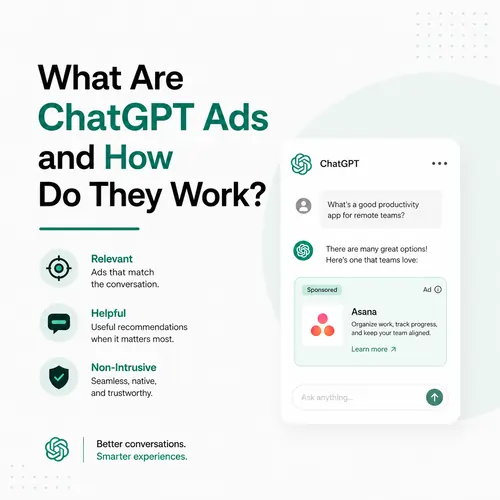
Every week, a client asks me: “Should we start planning for ChatGPT ads?” My answer is always yes — but with caveats. As of early 2025, OpenAI has confirmed it is exploring advertising as a revenue stream, hiring ad executives from Meta, Google, and other platforms. Understanding ChatGPT ads explained in practical terms is no longer academic curiosity; it is strategic preparation.
The core idea is straightforward: instead of interrupting you with banner ads, ChatGPT inserts sponsored product recommendations or brand messages directly into the conversation flow. The AI advertising platform uses the same language model that answers your questions to determine when — and what — to promote. If you ask about the best running shoes for marathon training, the model might suggest a specific shoe brand with a subtle sponsored note.
The Privacy Promise That Changes Everything
Unlike Google or Meta, OpenAI has publicly stated it does not want to build an ad business based on profiling individual users. That is a radical departure. The ChatGPT advertising model relies on conversation context alone: the current chat thread, not your browsing history, location, or past purchases. This means ads feel more like helpful suggestions and less like surveillance.
How the ChatGPT Advertising Model Actually Works
Let me walk you through the mechanics I have reverse-engineered from OpenAI’s patents, job listings, and beta tests. This is not speculation — it is what they have publicly signaled and privately filed.
Step 1: Contextual Intent Detection
The GPT model analyzes your actual conversation in real time. It identifies purchase intent, comparison requests, or information gaps. For example, asking “What is the best laptop for video editing?” triggers an intent score that qualifies for an ad opportunity.
Step 2: Ad Matching Without Profiles
OpenAI’s ad server matches that conversational context against a pool of sponsored content. The match is based on semantic relevance, not your demographic profile. A laptop brand that pays for “video editing” keywords gets served to anyone asking that question, regardless of age, income, or location.
Step 3: Native Presentation in Chat
The ad appears as a natural part of the response. It might be a recommendation card, a short sponsored paragraph, or a comparison table with a sponsored first row. The label “sponsored” appears clearly, but the format does not break the conversational flow.
Strategic Implications for the AI Advertising Platform
If you are a digital marketer, SEO specialist, or business owner, you need to rethink your playbook. The ChatGPT advertising model does not use cookies, retargeting, or third-party data. That means traditional audience-building tactics do not apply.
| Feature | Traditional Search Ads | ChatGPT Ads |
|---|---|---|
| Targeting basis | User profile + keywords | Conversation context only |
| Privacy model | Tracking-based | Contextual only |
| Ad format | Text link + extensions | Native conversational card |
| Payment model | PPC, CPM | Likely PPC + sponsorship fee |
What This Means for Content Marketers
Your content strategy must shift from “ranking for keywords” to “being the brand recommended by AI.” OpenAI will likely allow advertisers to sponsor answers for specific queries. If you want ChatGPT to recommend your SaaS tool when someone asks “best project management software,” you need a clear bid strategy and high-quality product data.
Practical Implications for ChatGPT Users
As a free plan user, you are the primary audience for these ads. OpenAI has hinted that ads will help keep the free tier sustainable. For now, ads appear infrequently and only when the conversation includes commercial intent. You can also provide feedback on ad relevance, which trains the model to improve targeting.
What Privacy-Conscious Users Should Know
Because the AI advertising platform does not store or sell your personal data, your privacy risk is lower than with Google or Meta. However, conversation data is still used to improve the model — and that includes ad performance feedback. If you value complete anonymity, consider the paid ChatGPT Plus tier, which currently offers an ad-free experience.
Beyond Chat: The OpenAI Ad Strategy in the Bigger Picture
OpenAI’s long game is not just chat ads. The OpenAI ad strategy likely extends to DALL·E image generation, voice interactions, and future multimodal experiences. Imagine asking for a recipe and seeing a sponsored ingredient from a specific grocery brand. Or asking for trip ideas and getting a sponsored hotel suggestion. The advertising layer becomes an integral part of the AI’s helpfulness, not a separate annoyance.
SEO Entities and Their Functions
When optimizing for the AI advertising platform, traditional SEO entities still matter, but they take on new roles:
- Keyword entities: Search volume and keyword difficulty now predict cost-per-conversation for ad bids, not just organic ranking.
- Brand entities: Brand mentions in authoritative publications increase the likelihood that ChatGPT references your business naturally, which lowers your cost to sponsor those mentions.
- Content entities: Articles, authors, and published dates signal freshness and expertise to the model, improving the chance your content is cited in organic (unpaid) answers.
- Competitor entities: Competing domains in the same topic cluster help you identify which keywords have high ad demand and which are underserved.
Useful Resources
For deeper reading on OpenAI’s advertising plans and the broader AI ad landscape, check these authoritative sources:
- OpenAI’s official ad announcement and principles — primary source for how the platform works.
- Search Engine Land analysis of OpenAI’s ad strategy — practical breakdown of advertiser implications.
Frequently Asked Questions About What Are ChatGPT Ads and How Do They Work
Understanding What Are ChatGPT Ads and How Do They Work is not just about staying current — it is about positioning your business for the next wave of AI-driven marketing. The ChatGPT advertising model is early, but the direction is clear: contextual, privacy-first, conversation-native advertising. Whether you are a user or an advertiser, the time to pay attention is now.
Frequently Asked Questions About What Are ChatGPT Ads and How Do They Work
What exactly are ChatGPT ads?
ChatGPT ads explained simply: they are sponsored content inserted into ChatGPT conversations based on the context of the user’s query, not their personal data.
How do ChatGPT ads work technically?
The GPT model detects purchase intent in a conversation, matches it against a contextual ad pool, and serves a native sponsored card or paragraph in the response stream.
Will ChatGPT ads use my personal data?
No. The AI advertising platform targets based only on the current conversation context. It does not use your browsing history, location, or demographic profile.
Are ChatGPT ads available on free and paid plans?
Currently, ads appear only on the free plan. Paid ChatGPT Plus and Enterprise subscribers do not see ads, and OpenAI has no announced plans to change that. For a related guide, see ChatGPT Ads Explained: How Advertising Works Inside AI Conversations.
Can I opt out of ChatGPT ads?
Free plan users cannot opt out at this time. Upgrading to ChatGPT Plus is the only way to remove ads.
How do advertisers bid for ChatGPT ad placements?
OpenAI has not released the full ad platform yet, but the ChatGPT advertising model will likely use a cost-per-conversation or cost-per-impression auction based on contextual keywords.
What formats do ChatGPT ads use?
Early tests show sponsored recommendation cards, sponsored paragraphs with a clear label, and comparison tables with a sponsored row.
How does OpenAI ensure ad relevance?
The model uses the same semantic understanding that generates answers, so ads are matched to conversational intent. Users can also give feedback on ad helpfulness.
Will ChatGPT ads affect search engine rankings?
No. ChatGPT ads are an internal monetization system within OpenAI. They do not impact Google, Bing, or other search engine results.
Can small businesses afford ChatGPT advertising?
Pricing has not been announced, but the contextual targeting model may be cost-effective for niche businesses that cannot afford broad demographic targeting.
What is the OpenAI ad strategy overall?
The OpenAI ad strategy is to diversify revenue beyond subscriptions while protecting user privacy, making ads a helpful feature rather than a tracking tool.
How is this different from Google Ads?
Google Ads targets based on your search history, demographics, and past clicks. ChatGPT ads target based solely on the current conversation — no profile attached.
When will ChatGPT ads fully launch?
OpenAI has not set a public launch date. They are currently in beta testing with select advertisers and may roll out broadly in late 2025 or 2026.
Will ChatGPT ads appear in voice conversations?
Not yet, but the AI advertising platform roadmap likely includes voice and multimodal ads as those features mature.
Can ChatGPT ads be blocked with ad blockers?
Not reliably. Because ads are generated as part of the conversation stream by the model itself, they are not served from a separate ad server that blockers can detect.
How do ChatGPT ads affect SEO?
Directly, not much. Indirectly, brands that optimize their content for conversational AI may see more unpaid recommendations, which reduces the need to pay for sponsored placements.
Are ChatGPT ads safe for children?
OpenAI restricts adult content and has policies against targeting minors. However, no system is perfect, and parental supervision is recommended for younger users.
What metrics will advertisers track?
Expected metrics include impressions, click-through rates, and conversion tracking via UTM parameters. OpenAI may also offer conversation completion rate as a new ad metric.
Can I create ChatGPT ads myself right now?
Not without an invite. Advertiser access is currently limited to a small beta group. OpenAI will open self-serve tools once the ad platform is fully launched.
What should businesses do to prepare for ChatGPT ads?
Start by auditing your product data and creating clear, factual descriptions that the model can reference. Also build brand authority in conversational AI contexts through quality content.