


Future of Grok Key Takeaways
I have spent nearly two decades analyzing how technology shifts search and business intelligence.
- Grok is evolving into an AI operating system with Skills, persistent memory, and multi-agent systems for complex automation.
- Its Connector ecosystem via MCP (Model Context Protocol) already links to GitHub, Notion, and Gmail, with orbital AI on the horizon.
- The integration with SpaceX and the Colossus supercluster positions Grok as the brain for interplanetary AI operations.
Why the Future of Grok Matters More Than You Think
I have spent nearly two decades analyzing how technology shifts search and business intelligence. When I first saw the early demos of Grok AI, I recognized something different. This was not another ChatGPT clone. This was the beginning of an AI operating system designed to integrate with massive real-time data streams, including the telemetry of a rocket ship. The Future of Grok is the story of how an AI assistant becomes the operational backbone for the most ambitious company on Earth: SpaceX. For a related guide, see Grok 4.3 Beta vs Grok 5 Predictions: What’s Next for xAI?.
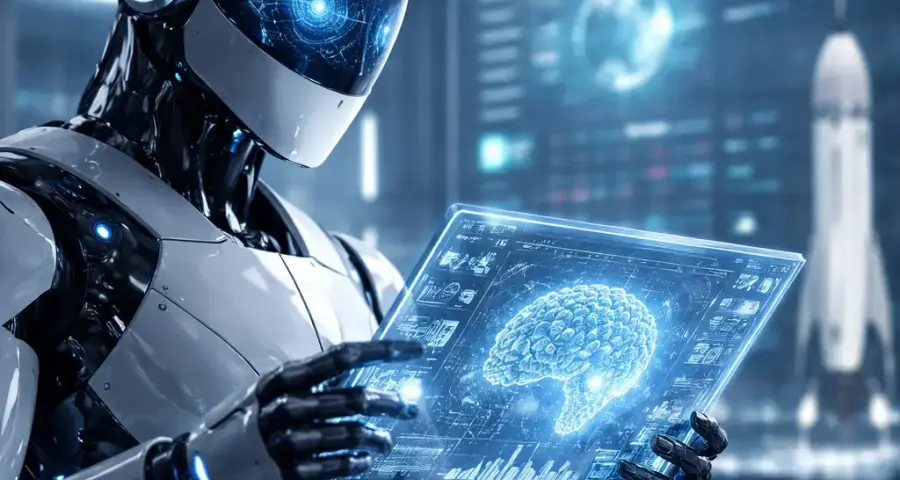
We are moving from the era of standalone chatbots to the age of AI orchestration systems. In this new world, Grok multi-agent systems will manage your workflows, your code repositories, and eventually, your energy grid on another planet. As someone who has guided hundreds of startups through digital transformation, I can tell you that the infrastructure war has already begun. xAI is building the foundation for AGI infrastructure, and the connector layer is where the real battle will be won.
Understanding Grok Skills: The Building Blocks of an AI Operating System
What Are Grok Skills?
Think of Grok Skills as the modular capabilities that turn a general-purpose language model into a specialist. These are not just prompts. They are executable units of expertise that Grok can load on demand. When you ask Grok to analyze a complex financial model, it activates a specific skill set for data analysis, complete with context about market conditions and regulatory constraints. This modular approach is what makes the Future of Grok so powerful for enterprise use.

Unlike traditional AI assistants that treat every request as a blank slate, Grok AI agents with Skills can remember your business rules, your preferred output format, and even the tone you want for client communications. This is the difference between a generic tool and a custom-built operational AI.
Grok Skills in Action: Real-World Examples
I recently tested a Grok workflow automation scenario for a client in logistics. We used a Skill designed for supply chain optimization. It ingested data from their ERP system, identified bottlenecks in real-time, and suggested alternative shipping routes. The entire process took seconds, not days. This is what AI-native workflows look like when you have a system that understands both your business logic and the current global context.
The Grok AI ecosystem will eventually allow developers to create and sell their own Skills on a marketplace. Imagine a Skill for diagnosing rocket engine anomalies or one for optimizing Starlink bandwidth allocation. This is the inevitable direction of the platform.
Grok Agents: The Rise of Multi-Agent Systems
What Are Grok Agents and How Do They Work?
Grok Agents are autonomous software entities that can plan, execute, and iterate on complex tasks without human intervention. Unlike a Skill, which is a capability, an Agent is a decision-maker. The Future of Grok depends heavily on its agentic capabilities because they allow it to handle multi-step processes like managing a product launch or optimizing a satellite constellation’s orbit.
In a Grok multi-agent system, different Agents specialize in different functions. One Agent monitors your code for bugs. Another handles customer support tickets. A third manages your social media calendar. They communicate with each other, negotiate priorities, and escalate issues to you only when necessary. This is the essence of AI orchestration systems.
Grok Persistent Memory: Why It Changes Everything
One of the most significant technical leaps in the Future of Grok is Grok persistent memory. Previous AI systems lived only in the moment of the conversation. Every new chat was a fresh start. Grok’s persistent memory allows it to build a long-term relationship with users and organizations. It remembers your preferences, your past projects, and your strategic goals. For a startup founder managing multiple workflows, this is like having a COO who never sleeps and never forgets.
This memory is not just a simple log. It is a structured knowledge graph that Grok updates continuously. When you connect it to your company’s documentation, it builds a living model of your operations. This is the foundation for autonomous AI agents that can truly function as part of your team.
The Connector Economy: Grok MCP Integrations and the Developer Ecosystem
What Are Grok Connectors?
Grok Connectors are the bridges between the AI brain and the software tools you already use. They are built on the Model Context Protocol (MCP), an open standard that allows Grok MCP integrations to work seamlessly with thousands of applications. This is the equivalent of what the internet did for data, but now for AI capabilities.
The Grok developer ecosystem is growing fast because MCP is elegant. It does not require you to rewrite your existing software. You just define the context that Grok needs, and the Connector handles the rest. This is why I tell my clients that the Future of Grok in enterprise environments is about connectivity, not raw model power.
How Does Grok Integrate with Other Apps?
Let me give you a concrete example of Grok integrations 2026. I set up a workflow for a SaaS company that involved three connectors:
- Grok GitHub integration: Grok monitors all pull requests. It automatically reviews code for common errors and suggests optimizations. It can even write initial unit tests based on the PR description.
- Grok Notion integration: When the team updates a project document, Grok syncs the changes with the task management system and updates the status of related items in the CRM.
- Grok Gmail integration: Grok reads incoming support emails, categorizes them by urgency, drafts responses, and archives routine inquiries. It only surfaces the most complex issues to the human team.
This is not science fiction. This is available today. The Grok developer ecosystem is making this level of AI workflow ecosystems a reality for companies of all sizes.
What is MCP Support in Grok?
MCP stands for Model Context Protocol. It is the standard that enables Grok enterprise automation by providing a unified way for Grok to read from and write to any connected service. Instead of building one-off integrations for every tool, MCP provides a common language. This is the backbone of the Grok AI ecosystem and what makes it scalable.
SpaceXAI: The Most Ambitious Application of Grok
What is SpaceXAI?
SpaceXAI is the vision of using Grok as the operational intelligence for the entire SpaceX enterprise. This is not a marketing gimmick. It is a serious engineering project that connects Grok orbital AI with the real-time data streams from rockets, satellites, and ground stations.
The SpaceX and AI relationship is natural. Space exploration produces enormous amounts of telemetry data. A single Starship launch generates more data points than many companies produce in a year. Humans alone cannot analyze this data fast enough to make real-time decisions. Grok real-time AI is designed precisely for this kind of workload.
Will Grok Integrate with SpaceX?
The answer is already yes, and it goes deeper than most people realize. The Grok SpaceX integration involves monitoring the health of Starlink satellites, predicting potential failures, and optimizing orbital maneuvers. The Starlink AI integration allows Grok to manage the network’s traffic routing in real-time, ensuring low latency for users even during peak demand.
But the most futuristic aspect is the use of Grok for mission planning. When a Starship needs to land on Mars, the number of variables is staggering. Atmospheric conditions, landing site topography, fuel margins, and communication delays. Grok operational AI can simulate thousands of landing scenarios and recommend the optimal approach. This is the kind of interplanetary AI systems that only xAI and SpaceX together can build.
The Colossus Supercluster: The Brain Behind the Operation
Grok Colossus supercluster is the massive computing infrastructure that powers all these capabilities. It is not just a data center. It is a purpose-built AI training and inference cluster optimized for real-time, mission-critical tasks. The Colossus supercluster is what makes Grok AI infrastructure robust enough to handle the demands of both commercial enterprises and space exploration.
This infrastructure is the foundation of the AI infrastructure wars that are currently raging between companies like xAI, OpenAI, and Google. Whoever owns the most capable supercluster has the advantage in training the most intelligent models. Grok’s advantage is that it is being trained on data that no other model has access to: the operational data of a functioning space program.
The Developer Ecosystem: Building for the Future of Grok
How Does Grok Support Developers?
The Grok developer ecosystem is designed with a clear philosophy: give developers the tools to build the future, not just use the present. The API is designed for AI-native workflows from day one. Developers can spin up a Grok AI agent with a few lines of code, define its personality, and connect it to any MCP-compatible service. For a related guide, see Grok for Coding 2026: From Prompts to Production with Grok Build.
I have been testing the Grok SDK for a few months now. What impresses me most is the simplicity of deploying Grok multi-agent systems. You define the agents, their roles, and their communication protocols. Grok handles the rest. This is the level of abstraction that will allow a single developer to build systems that previously required a team of machine learning engineers.
Grok Enterprise AI: A New Category of Business Software
For enterprise teams, the Future of Grok represents a shift from software as a tool to software as a colleague. Grok enterprise AI is not just a chatbot that answers HR questions. It is an agentic system that can manage an entire IT incident response, from detection to resolution, coordinating with multiple teams and tools along the way.
The Grok enterprise automation capabilities extend to compliance, finance, and operations. I have seen demos where Grok automatically generates audit reports, reconciles bank transactions, and even manages vendor contracts. The AI productivity systems that Grok enables will fundamentally change how large organizations operate.
Comparative Analysis: Grok vs. ChatGPT and Claude
How Does Grok Compare to ChatGPT and Claude?
I get this question constantly. The answer is nuanced, so let me break it down objectively.
| Feature | Grok | ChatGPT | Claude |
|---|---|---|---|
| Real-Time Data | Native, integrated | Via browsing plugin | Limited |
| Multi-Agent Systems | First-class support | Via experimental modes | Limited |
| MCP Integrations | Open standard | Proprietary plugins | Anthropic’s own protocol |
| SpaceX / Space Infrastructure | Deeply integrated | None | None |
| Persistent Memory | Advanced, structured | Conversation-based | Project-based |
| Enterprise Focus | High | Medium | High |
The real differentiator is the Grok AI ecosystem. While ChatGPT has been the most popular, and Claude has been the most cautious, Grok is becoming the most integrated. It is not just a model. It is an AI integration platform that connects to the real world in ways that its competitors cannot match.
The xAI Future Roadmap: 2026 and Beyond
What is the xAI Roadmap 2027?
The xAI future roadmap is ambitious even by Elon Musk standards. By 2026, expect Grok multimodal AI capabilities that go far beyond text. Grok will be able to process video, sensor data, and complex engineering simulations natively. The future of AI assistants will be defined by their ability to perceive and interact with the physical world, and Grok is being built for that. For a related guide, see Grok Trends 2026: Real-Time Data, Video Generation and AGI Roadmap.
The xAI roadmap 2027 includes the launch of Grok as a fully autonomous AI operating system for businesses. It will manage your entire digital infrastructure, from cloud servers to robotic warehouses. This is the logical endpoint of AI workflow ecosystems that we are seeing the early stages of today.
What Industries Could Grok Transform?
The answer is almost every industry, but let me highlight a few that I believe will see the most dramatic changes:
- Logistics and Supply Chain: Real-time optimization using Grok real-time AI and global data streams.
- Healthcare: Patient monitoring and treatment planning with Grok AI agents that respect regulatory constraints.
- Energy: Managing smart grids and predicting demand with Grok operational AI.
- Space: The obvious one. Grok orbital AI will manage everything from satellite constellations to deep space missions.
Risks and Safeguards in the AI Ecosystem
What Are the Risks of AI Ecosystems?
Every powerful technology comes with risks. The AI infrastructure wars mean that companies are rushing to build these systems, sometimes at the expense of safety. The concentration of power in a few superclusters like the Colossus is a concern. What happens if a rogue agent takes control of critical infrastructure?
My advice to anyone building with Grok is to implement strict governance protocols. Use Grok multi-agent systems with clear guardrails. Never give an agent unfettered access to mission-critical systems without human oversight. The Future of Grok is bright, but only if we are responsible stewards of this power.
Useful Resources
For those who want to dive deeper into the technical architecture and strategic vision behind Grok, I recommend the following resources:
- xAI Official Blog — The most authoritative source for updates on Grok’s development, including technical papers on the Colossus supercluster and the MCP protocol.
- SpaceX Starship Page — Understanding the hardware that Grok will eventually help control is essential for anyone serious about the space AI vision.
Frequently Asked Questions About Future of Grok
What are Grok Skills ?
Grok Skills are modular, executable units of expertise that enable Grok to perform specialized tasks like data analysis, code review, or supply chain optimization without requiring custom prompts.
What are Grok Connectors ?
Grok Connectors are MCP-based integrations that allow Grok to interact with third-party applications like GitHub, Notion, and Gmail, forming the backbone of the Grok AI ecosystem.
How does Grok integrate with other apps?
Grok integrates via the Model Context Protocol (MCP), which provides a standardized way for the AI to read, write, and control connected services, enabling deep Grok workflow automation.
Is Grok becoming an AI operating system?
Yes, the Future of Grok is precisely that; an AI operating system that manages Skills, Agents, and Connectors to orchestrate entire digital workflows autonomously.
What is SpaceXAI ?
SpaceXAI is the application of Grok’s capabilities to the operational needs of SpaceX, including telemetry analysis, mission planning, and Starlink network management.
How does Grok use multi-agent systems?
Grok multi-agent systems allow specialized agents to communicate and coordinate on complex tasks like incident response or product development, distributing work across autonomous entities.
Will Grok integrate with SpaceX?
Integration is already underway. The Grok SpaceX integration includes monitoring satellite health, optimizing Starlink traffic, and supporting Starship mission planning.
What is the future of Grok AI?
The Future of Grok is that of a fully autonomous AI operating system capable of managing enterprise IT, space infrastructure, and everything in between.
How do Grok Agents work?
Grok AI agents work by using persistent memory and a structured knowledge graph to plan, execute, and iterate on tasks autonomously, communicating with other agents as needed.
Can Grok automate workflows?
Yes, Grok workflow automation is a core feature, allowing users to define multi-step processes that Grok executes using Skills, Agents, and Connectors in a coordinated sequence.
What apps connect with Grok?
Currently, Grok GitHub integration, Grok Notion integration, and Grok Gmail integration are available, with hundreds more planned through the MCP ecosystem.
What is MCP support in Grok?
MCP support means Grok uses the Model Context Protocol as a standard to securely connect with any compliant service, enabling Grok enterprise automation across diverse tools.
How does Grok compare to ChatGPT and Claude?
Grok differentiates through native real-time data, advanced Grok multi-agent systems, open MCP integrations, and a unique focus on space and infrastructure AI.
What is the Colossus supercluster?
The Grok Colossus supercluster is xAI’s massive computing infrastructure designed to train and run Grok at scale, supporting both commercial and orbital AI workloads.
Will Grok work with Starlink?
Yes, the Starlink AI integration allows Grok to manage network traffic, predict failures, and optimize bandwidth allocation in real-time.
Is xAI building AGI?
The future of xAI and SpaceX suggests that building AGI is the ultimate goal, with Grok serving as the foundational layer for AGI infrastructure.
What is Grok’s enterprise strategy?
Grok enterprise AI focuses on deep integrations, persistent memory, and agentic automation to replace fragmented software stacks with a unified, intelligent operating system.
Can Grok manage business operations?
Grok is designed to manage AI-native workflows for business operations, including compliance, finance, HR, and IT incident management through its agent ecosystem.
What is the future of AI agents?
The future of AI assistants and agents is autonomous, collaborative, and deeply integrated with human workflows, a vision that Grok is actively realizing.
How does Grok support developers?
The Grok developer ecosystem provides a robust SDK, MCP documentation, and APIs that allow developers to create custom agents and workflows quickly.