

Rank Math SEO is a powerful WordPress SEO plugin that helps you control technical SEO, on‑page optimization, schema, and AI‑driven insights from inside your dashboard. It is popular in 2026 because it combines an easy setup wizard, rich features, and clean UI that even beginners can use.
In this guide, you will learn what Rank Math is, how to set it up, and how to use it to build a semantic site that works for SEO, AEO, GEO, and the knowledge graph. If you want a step‑by‑step beginner setup, see my tutorial: How to Configure Rank Math SEO Step by Step (For Beginners).
For a deeper dive into schema, redirects, and Content AI, read Advanced Rank Math Features: Schema, Redirections, and Content AI Explained.
What Is Rank Math SEO and Why It Matters in 2026
Rank Math SEO is a freemium WordPress SEO plugin that gives you tools for titles and meta tags, XML sitemaps, schema markup, redirects, local SEO, and content analysis in one place. The free version already includes many features that other plugins lock behind a paid plan.
In 2026, Rank Math stands out because it adds AI support (Content AI), better schema control, and more granular settings for robots meta and indexing. This makes it a strong choice if you want your WordPress site to be visible in classic search results and in AI Overviews or answer engines.

If you are still comparing plugins, you can read my breakdown: Rank Math vs Yoast vs All in One SEO: Which WordPress SEO Plugin Should You Use in 2026?. For plugin details you can also check the official Rank Math SEO listing on WordPress.org.
Key Features of Rank Math SEO
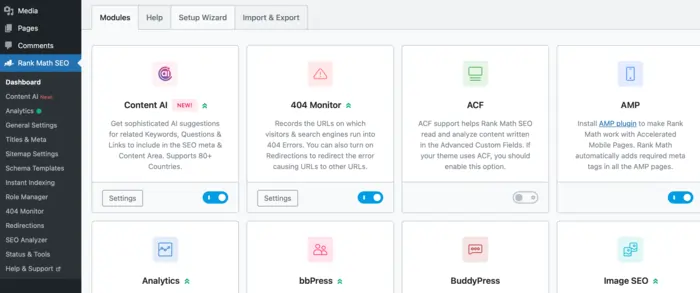
Clean Interface and Setup Wizard
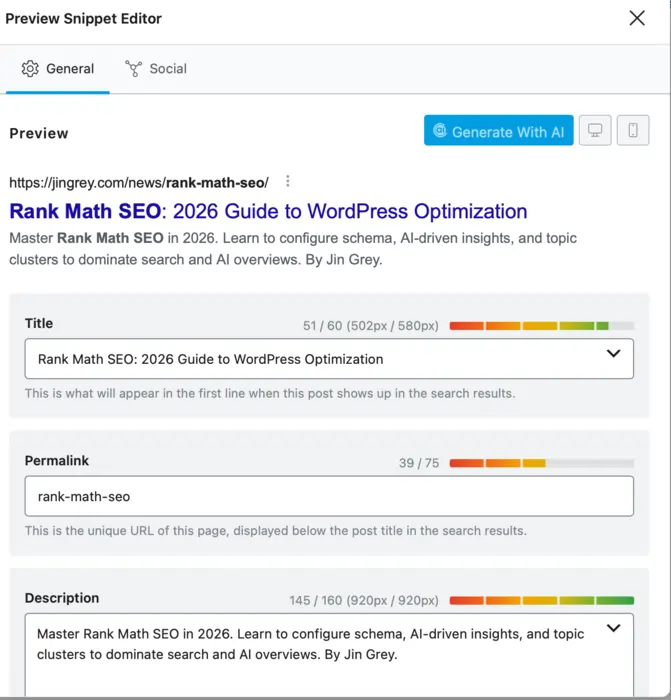
Rank Math comes with a guided setup wizard that walks you through basic SEO settings, sitemaps, and site identity in a few minutes. The interface shows your SEO options in a clear panel inside the post editor, with previews for search and social snippets.
The wizard lets you choose Easy or Advanced mode, so beginners get safe defaults while experienced SEOs can adjust everything. You can always switch to Advanced later if you want more control.
On-Page SEO and Content Analysis
When you edit a post or page, Rank Math SEO shows an SEO score and a checklist for your chosen focus keyword. It checks title and meta, keyword placement, content length, internal and external links, and readability.
This real‑time feedback helps you optimize your content in a simple way, especially if you are new to SEO. You can also preview how your snippet looks in Google Search results or when shared on social media.
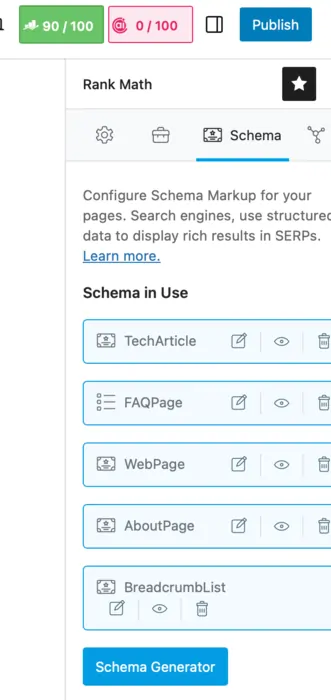
Schema Markup and Rich Snippets
Rank Math makes it easy to add schema markup to your posts so search engines understand your content. You can choose from article, product, FAQ, HowTo, local business, and other schema types, or use templates for repeatable content.
Proper schema improves eligibility for rich results, helps AI models parse your pages, and feeds the Google Knowledge Graph. For more detail, see Google’s structured data guidelines.
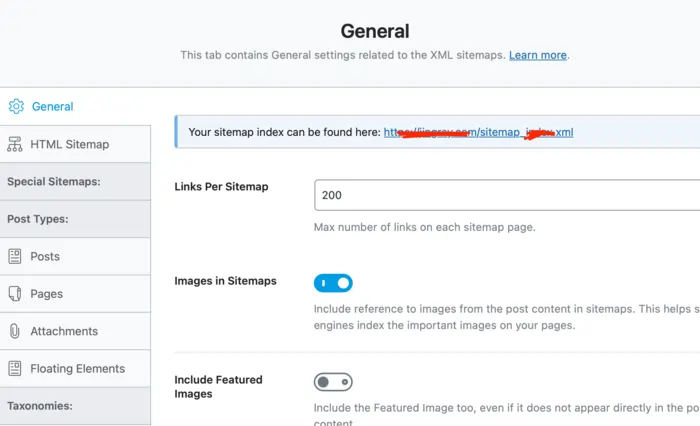
XML Sitemaps and Indexing Control
The plugin can generate XML sitemaps for posts, pages, and selected taxonomies so search engines discover content faster. You can choose what to include and exclude, which helps avoid indexing thin archive pages or low‑value content.
Rank Math SEO also lets you set global robots meta rules and override them on each post. This level of control is useful for pruning content and keeping your index focused.
Redirections and 404 Monitor
Rank Math includes a built‑in redirection manager and 404 monitor, so you can fix broken links without another plugin. You can create 301, 302 and other redirect types, and log hits to see which URLs are causing errors.
This protects your link equity when you change URLs, and prevents a poor user experience from dead pages. It is also important when you restructure content into pillar and cluster formats.
Local SEO and Knowledge Graph Data
With the Local SEO and knowledge graph options, you can tell search engines who you are: business name, logo, address, contact details, and social profiles. Rank Math SEO can output Organization or Person schema, which is vital if you want to appear as a clear entity in the Google Knowledge Graph.
You can learn more about the knowledge graph in Rank Math’s glossary: What is Google Knowledge Graph?. When you fill these fields correctly, you give AI and search engines a strong “identity layer” for your brand.
How to Install and Configure Rank Math SEO (Quick Overview)
You can install Rank Math SEO directly from your WordPress admin dashboard. Go to Plugins → Add New, search for “Rank Math SEO,” install, and activate.

After activation, the setup wizard starts and asks basic questions about your site type, business details, and existing SEO plugins. You can connect Google Search Console inside the wizard so Rank Math can pull data into your dashboard.
The wizard also lets you:
- Enable sitemaps and choose which content types to include.
- Set default title and meta patterns for posts, pages, and archives.
- Turn on modules such as schema, 404 monitor, redirections, and Local SEO.
If you need a slow, visual walkthrough, follow How to Configure Rank Math SEO Step by Step (For Beginners).
Using Rank Math to Optimize Your Content

Focus Keywords and SEO Score
For each post, you choose one or more focus keywords and Rank Math SEO gives you an SEO score. It checks whether your keyword appears in the title, URL, meta description, first paragraph, headings, and body content.
Use this score as a guide, not a strict rule. Write naturally, then adjust title, meta, and structure until the main signals are covered. This helps your content stay readable while still sending clear signals to search engines.
Titles, Meta Descriptions, and Slugs
Rank Math lets you customize your SEO title and description with variables like site name, separator, and post title. You can write short, direct titles that include “Rank Math,” “Rank Math SEO,” or “WordPress SEO plugin” in a natural way.
You can also edit the URL slug to be clean and descriptive, which improves both UX and relevance. Always avoid keyword stuffing and keep your language simple.
Internal and External Links
Inside the editor, Rank Math SEO checks if you have internal and external links in your content. You should add internal links to other Rank Math guides on your site, like:
- Using Rank Math Pillar Content and Topic Clusters to Build Topical Authority
- How to Optimize Rank Math for AI Overviews and Answer Engines (AEO Mindset)
You can also add external links to trusted resources, for example Google Search Central documentation or the Rank Math knowledge base, to support key statements. Good internal linking helps build your own site‑level knowledge graph and supports GEO strategies.
Advanced Modules You Should Not Ignore
For many sites, the real power of Rank Math SEO comes from extra modules.
- Schema Templates: Let you pre‑define schema for certain content types and reuse them.
- Image SEO: Automatically adds or adjusts image attributes to improve image search visibility.
- Video SEO: Helps you create video sitemaps and markup if you publish video content.
- Local SEO: Adds local business schema and support files if you serve a geographic market.
For detailed settings and examples, see Advanced Rank Math Features: Schema, Redirections, and Content AI Explained.
Building Pillar Content and Topic Clusters with Rank Math
Pillar content is a long, in‑depth page that covers a broad topic and links to narrower cluster articles. Rank Math supports this model by letting you mark a post as pillar content and by helping you maintain strong internal links.
This guide at https://jingrey.com/seo/rank-math-seo is your main Rank Math pillar, and it should link to all related clusters:
- Beginner setup tutorial
- Advanced features guide
- Pillar/cluster strategy guide
- Plugin comparison article
- AEO/GEO optimization article
This structure sends a clear signal about your topical authority and helps search engines understand the relationships between pages. For more strategy, see Using Rank Math Pillar Content and Topic Clusters to Build Topical Authority and Rank Math’s guide on pillar content and internal linking.
Rank Math for AEO, GEO, and the Knowledge Graph
AEO (Answer Engine Optimization) focuses on clear answers, while GEO (Generative Engine Optimization) focuses on being cited by AI systems. Rank Math SEO is not a magic switch for AI Overviews, but it gives you tools to structure your content in a way AI can understand.
To support AEO and GEO with Rank Math:
- Use FAQ and HowTo schema blocks for question‑based content.
- Set up Organization or Person schema under Local SEO / knowledge graph settings.
- Maintain clean internal link structures with clear anchors that describe entities and topics.
- Use Content AI (if available) to enrich your content with related questions and entities.
When you do this across your pillar and clusters, you are building a detailed, machine‑readable map of your expertise. AI and search systems can then reuse your content in answers and rich results more easily.
Rank Math vs Other SEO Plugins (Short View)
Many site owners ask if Rank Math is better than Yoast SEO or All in One SEO. In 2026, Rank Math offers more built‑in features in the free version, especially around schema, redirects, and local SEO.
Yoast and All in One SEO still work well and have their own ecosystems, but they often need extra add‑ons to match Rank Math’s feature set. For screenshots and test results, see Rank Math vs Yoast vs All in One SEO: Which WordPress SEO Plugin Should You Use in 2026?.
Common Rank Math SEO Mistakes to Avoid
Even with a strong plugin, people make simple mistakes that limit results.
- Running with default settings forever: The setup wizard is good, but you still need to review indexing rules, schema, and local SEO fields.
- Indexing thin archives: Leaving tag or date archives indexed can create duplicate or low‑value content.
- Skipping schema: Publishing long guides with no schema markup makes it harder to win rich results or AI citations.
- Ignoring redirects and 404s: After redesigns or content pruning, many URLs break and need redirects.
- Focusing only on the score: Chasing a perfect Rank Math SEO score while ignoring real user value and intent hurts long‑term SEO.
Audit these points on your site and fix them as part of your regular SEO maintenance.
Keeping Your Rank Math Setup Healthy
SEO is not a one‑time job. Rank Math includes tools that help you maintain your setup.
- Use the SEO Analysis module occasionally to scan for technical and on‑page issues.
- Review 404 logs and redirects after structural changes.
- Revisit your pillar pages and clusters every few months to add new insights, update screenshots, or refine internal links.
You can see best‑practice internal linking patterns for GEO and knowledge‑graph building in this guide on internal linking strategies for GEO.
Frequently Asked Questions About Rank Math SEO
Is Rank Math SEO free?
Yes, Rank Math SEO has a powerful free version that includes titles and meta, schema, sitemaps, redirects, local SEO, and content analysis, with a paid plan for advanced features and tracking.
Can I switch from Yoast or All in One SEO to Rank Math?
Rank Math can import titles, meta data, and basic settings from major SEO plugins in a few clicks, so most sites can switch safely when you follow the migration steps.
Will Rank Math help me rank in AI Overviews and answer engines?
Rank Math alone does not guarantee AI visibility, but its schema, internal linking, FAQ/HowTo blocks, and knowledge graph settings help you structure content for AI consumption.
Do I still need SEO knowledge if I use Rank Math?
Yes, you still need to understand intent, keyword research, content quality, and link building; Rank Math SEO is a tool that supports your work, not a replacement.
Is Rank Math safe and updated for 2026?
Rank Math is actively maintained and updated with new features and bug fixes, and it supports modern SEO needs like schema, local SEO, and AI‑focused optimization.
